At-home tattoo removal has become a hot topic as more people look for affordable ways to erase unwanted ink. From DIY laser devices to homemade creams and natural remedies, the internet is full of promises. But do these methods actually work, and more importantly, are they safe?
In this guide, we break down the truth about at-home tattoo removal, explain why professional laser treatment is the gold standard, and help you decide the safest path forward.
What Is At-Home Tattoo Removal?
At-home tattoo removal refers to any method you can use outside of a professional clinic to fade or remove a tattoo. These methods range from over-the-counter creams and handheld laser devices to folk remedies like lemon juice, salt scrubs, and chemical peels.
The appeal is obvious: at-home methods are cheaper than professional treatments and can be done on your own schedule. But lower cost often comes with lower effectiveness and higher risk.
Common At-Home Tattoo Removal Methods
Tattoo Removal Creams
Tattoo removal creams claim to break down ink particles in the skin. Most contain acids like trichloroacetic acid (TCA) or lightening agents like hydroquinone.
The reality: No cream can penetrate deep enough into the dermis to fully remove professional tattoo ink. The FDA has not approved any topical product for tattoo removal. At best, these creams may slightly fade surface-level ink. At worst, they can cause chemical burns, scarring, and permanent skin damage.
At-Home Laser Devices
Several companies sell handheld laser devices marketed for tattoo removal. These devices operate at much lower power levels than professional Q-switched or picosecond lasers used in clinics.
The reality: Consumer-grade lasers lack the power density to shatter tattoo ink particles effectively. Professional lasers like the PicoWay or Q-switched Nd:YAG operate at specific wavelengths calibrated to target different ink colors. Home devices cannot match this precision. Using them incorrectly can burn the skin or cause hyperpigmentation.
Salt and Lemon Juice (Salabrasion)
This folk remedy involves rubbing salt or lemon juice into the tattooed area to wear away the ink.
The reality: This is essentially abrading the skin surface layer. It does not reach the dermis where tattoo ink sits. It can cause open wounds, infection, scarring, and significant pain with no meaningful tattoo fading.
Chemical Peels
Some people apply at-home chemical peels (glycolic acid, TCA peels) over tattoos hoping to strip away layers of skin.
The reality: While chemical peels can remove the top layer of skin, tattoo ink is deposited in the dermis, which is deeper than chemical peels can reach safely. Aggressive peeling can cause permanent scarring and skin discoloration.
Why At-Home Tattoo Removal Is Risky
Here are the main dangers of DIY tattoo removal:
- Scarring: Without proper training and equipment, you risk permanent scarring that may be worse than the original tattoo.
- Infection: Any method that breaks the skin barrier can introduce bacteria, leading to serious infections.
- Burns: Improper use of lasers, acids, or chemical agents can cause thermal or chemical burns.
- Hyperpigmentation or hypopigmentation: Skin color changes are common with at-home methods, especially on darker skin tones.
- Incomplete removal: Most at-home methods produce minimal fading at best, leaving you with a blurry, discolored tattoo that is harder to treat professionally later.
- No professional oversight: If something goes wrong, you are on your own.
How Professional Laser Tattoo Removal Works
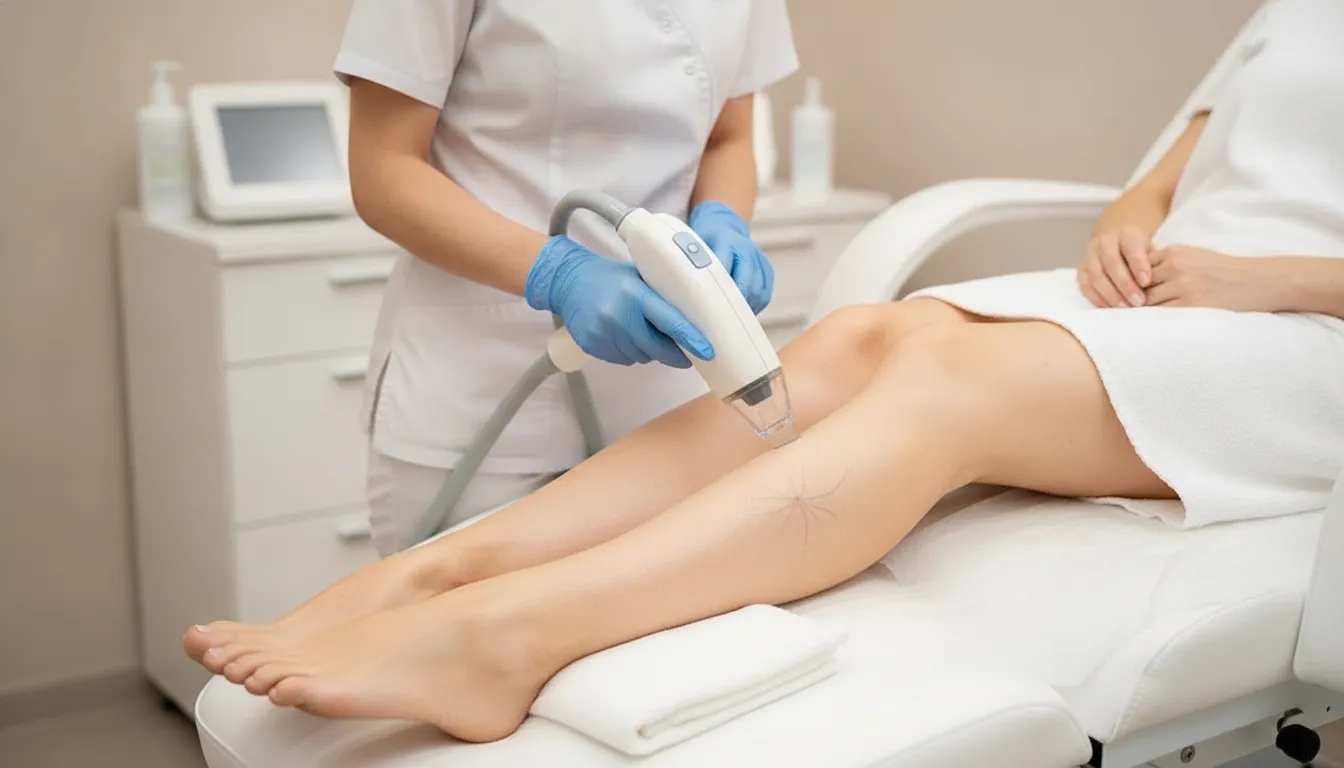
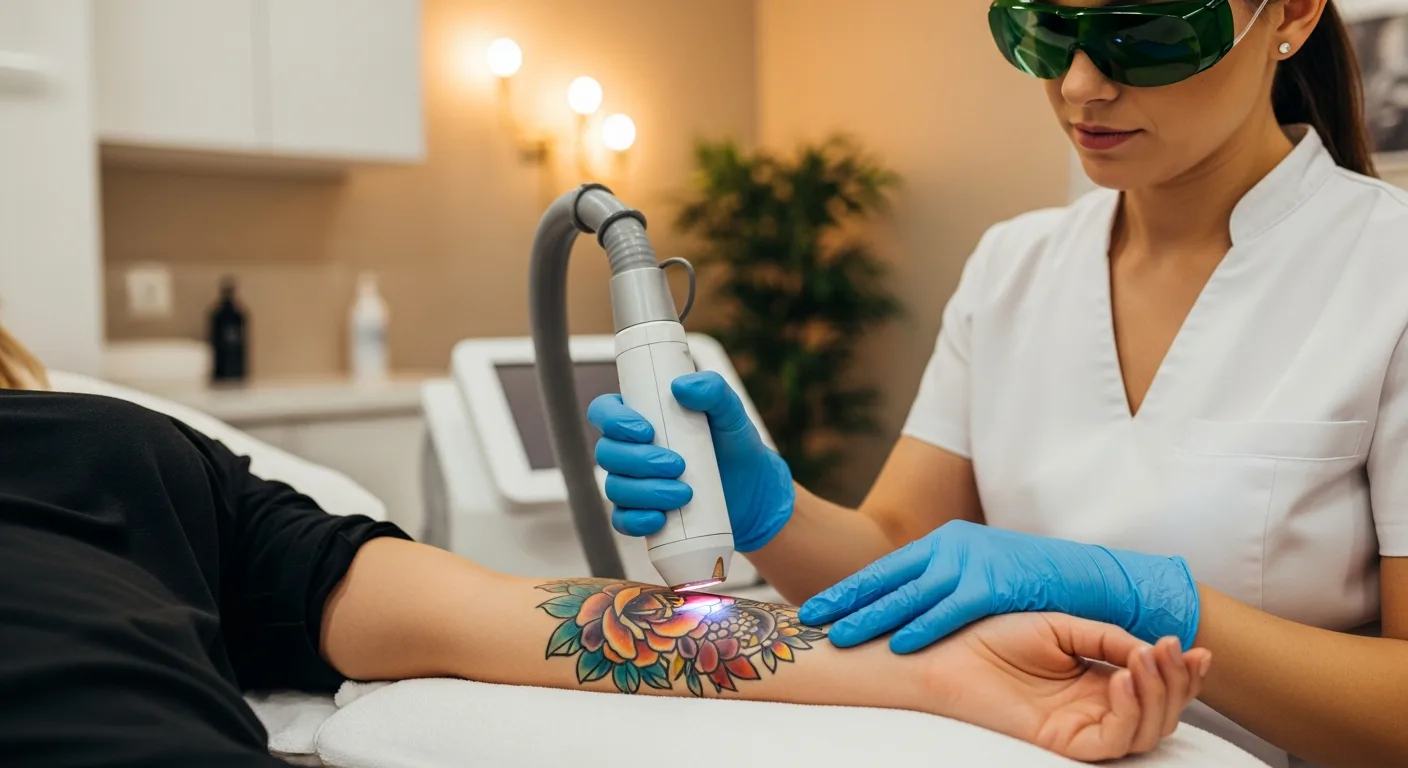
Professional tattoo removal uses medical-grade lasers that deliver ultra-short pulses of light energy at specific wavelengths. These pulses shatter tattoo ink particles into tiny fragments that your body’s immune system can naturally flush away.
The most effective technologies include:
- Q-switched Nd:YAG lasers: The industry standard for targeting dark inks (black, blue, green).
- Picosecond lasers (PicoWay): Deliver pulses in trillionths of a second, breaking ink into even smaller particles for faster clearing with fewer sessions.
Each session targets a different layer of ink, which is why multiple treatment sessions are needed. Most tattoos require 6 to 12 sessions spaced 6 to 8 weeks apart.
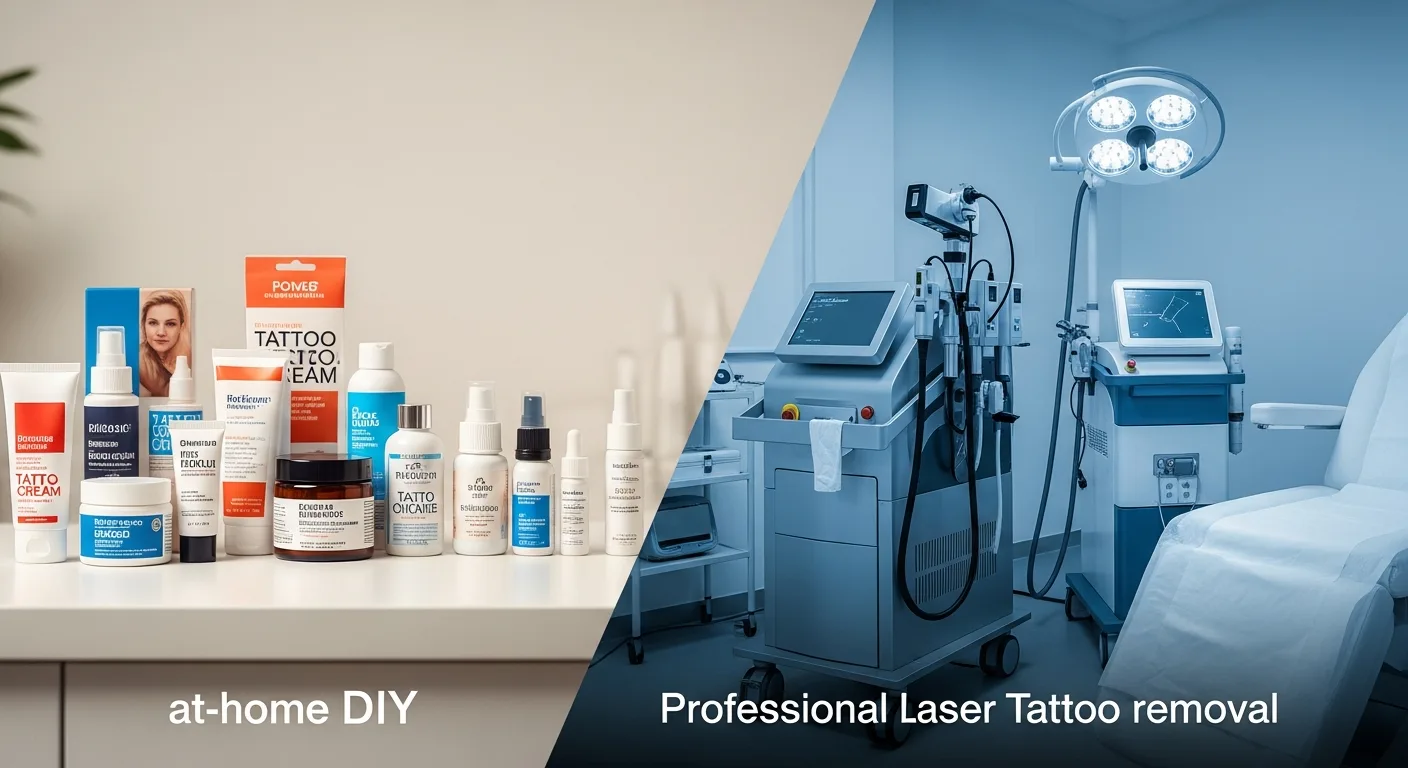
At-Home vs. Professional: A Side-by-Side Comparison
| Factor | At-Home Methods | Professional Laser |
|---|---|---|
| Effectiveness | Minimal fading | 90-95% removal possible |
| Safety | High risk of burns, scarring | Controlled, safe environment |
| Cost per session | $20-$100 for products | $200-$500 per session |
| Total cost for full removal | Not achievable | $1,200-$6,000 depending on size |
| Number of sessions | Indefinite | 6-12 typically |
| Supervision | None | Licensed technician |
| FDA cleared | No | Yes |
When to Consider Professional Treatment
If you are serious about removing a tattoo, professional laser treatment is the only method proven to achieve significant results without unacceptable risk. Consider professional treatment if your tattoo is professionally done, you want complete or near-complete removal, you have darker skin tones that require specialized laser settings, or you have already tried at-home methods without success.
At Ultimate Image MedSpa, we use advanced laser technology across our four DFW locations to safely remove tattoos on all skin types. Our experienced technicians customize every treatment to your specific tattoo, skin tone, and goals.
Tips for Affordable Tattoo Removal
- Ask about payment plans: Many clinics, including ours, offer financing options.
- Start with a consultation: A free consultation helps you understand exactly how many sessions you will need and the total cost.
- Look for package deals: Bundled session packages often cost less per session than individual treatments.
- Be patient between sessions: Spacing sessions properly (6-8 weeks) gives your body time to clear ink, which can reduce the total number of sessions needed.
Frequently Asked Questions
Can you really remove a tattoo at home?
No at-home method has been proven to fully remove a tattoo. Some methods may cause slight fading, but they carry significant risks of scarring, burns, and infection. Professional laser treatment is the only FDA-recognized method for effective tattoo removal.
How much does professional tattoo removal cost?
Professional laser tattoo removal typically costs $200-$500 per session, with most tattoos requiring 6-12 sessions. Small tattoos can cost as little as $1,200 total, while larger or multi-colored tattoos may cost up to $6,000.
Is laser tattoo removal painful?
Most patients describe the sensation as similar to a rubber band snapping against the skin. Clinics use topical numbing cream and cooling technology to minimize discomfort.
How long does tattoo removal take?
The full removal process typically takes 6 to 18 months, with sessions spaced 6-8 weeks apart. Fading is gradual and visible after each session. Learn more about the tattoo removal healing timeline.
Are at-home tattoo removal devices FDA approved?
No. The FDA has not approved any at-home device or topical product for tattoo removal. Only professional medical-grade lasers have FDA clearance for this purpose.
The Bottom Line
At-home tattoo removal methods are tempting because of their low upfront cost and convenience, but they come with real risks: scarring, burns, infection, and disappointing results. The science is clear that professional laser treatment is the only safe, effective way to remove unwanted tattoos.
If you are considering tattoo removal, start with a free consultation at Ultimate Image MedSpa. We will evaluate your tattoo, explain exactly what to expect, and create a personalized treatment plan. With four convenient locations across Dallas, Plano, Richardson, and Lewisville, expert tattoo removal is closer than you think. For personalized guidance, PicoWay tattoo removal can help you choose the right next step. For personalized guidance, tattoo removal sessions can help you choose the right next step. For personalized guidance, tattoo removal prices can help you choose the right next step. For personalized guidance, new client consultation can help you choose the right next step.
For more planning context, compare tattoo removal cost guide and tattoo removal before and after photos before scheduling a consultation.