That vibrant, multi-hued tattoo may have seemed like a great idea years ago, but now you’re ready for a change. While colorful tattoos are beautiful, they also present a unique challenge for removal. Different ink colors absorb light differently, meaning a one-size-fits-all laser won’t be effective. Successfully clearing shades of green, blue, or yellow requires advanced technology that can be precisely tuned to target each specific pigment. This is where the science of color tattoo removal truly shines. We’ll explain how our state-of-the-art lasers work to break down even the most stubborn inks, ensuring a safe and effective process for clearing your skin.
Key Takeaways
- Your body does the real work: The laser’s job is to break down the ink into tiny particles, but it’s your immune system that actually flushes them out. A healthy lifestyle directly supports this process and can lead to better, faster results.
- Not all ink is created equal: Your tattoo’s unique combination of colors, age, location, and ink depth determines how many sessions you’ll need. This is why a professional consultation is the first step to creating a realistic removal plan.
- Patience and aftercare are non-negotiable: The time between sessions is when your skin heals and your body clears the ink. Following your aftercare plan—especially protecting your skin from the sun—is essential for preventing complications and achieving the best outcome.
How Does Color Tattoo Removal Actually Work?
If you’re thinking about removing a tattoo, you’ve probably wondered what the process actually looks like. It’s not magic—it’s science. Modern laser technology has transformed tattoo removal from a painful, often ineffective procedure into a safe and reliable solution for clearing unwanted ink. The key is understanding that the laser doesn’t “erase” the tattoo. Instead, it works with your body’s natural processes to break down and flush away the ink particles for good.
At Ultimate Image MedSpa, we use the most advanced technology to ensure the best possible results. The process is designed to target the ink while keeping your surrounding skin safe. Let’s walk through exactly how it works, from the way the laser targets specific colors to what you can realistically expect from your sessions.
How the PicoWay Laser Targets Ink
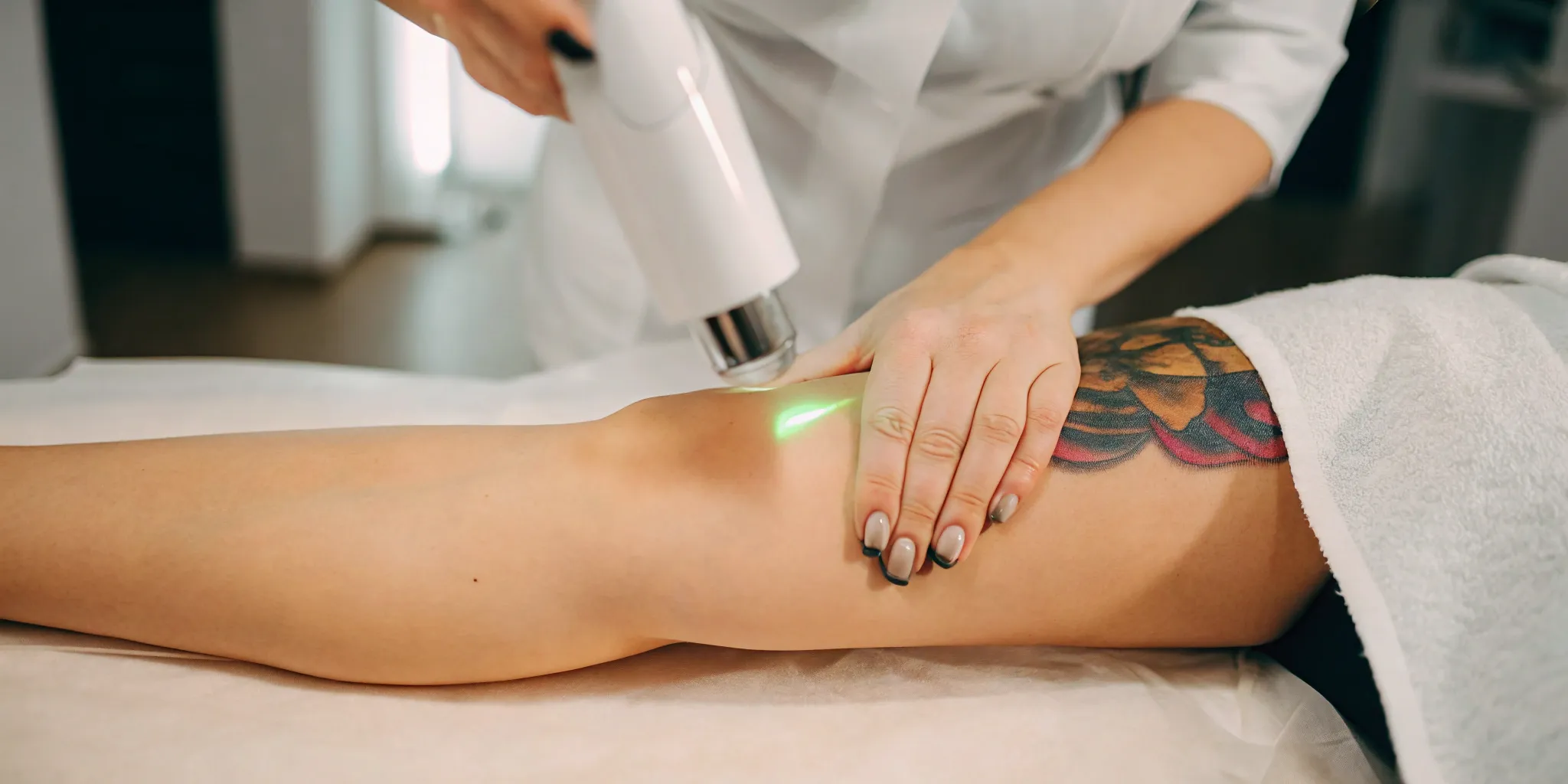
The secret to effective tattoo removal lies in breaking down large ink particles into pieces small enough for your body to eliminate. Think of it like breaking a large rock into tiny pebbles. Our PicoWay laser is a master at this. It delivers ultra-short pulses of energy—we’re talking picoseconds, which are trillionths of a second—directly to the tattoo ink. This rapid energy burst shatters the ink particles without the intense heat of older methods.
This is a huge step forward in laser tattoo removal, because less heat means less damage to the surrounding skin. It’s a safer, more comfortable, and more effective treatment that minimizes the risk of scarring. Your body’s immune system then does the rest, gradually clearing away the tiny ink fragments over time.
Why Some Colors Fade Faster Than Others
Have you ever heard that black tattoos are the easiest to remove? It’s true, and there’s a simple reason for it. Black ink is the easiest to remove because it absorbs all wavelengths of laser light, making it a straightforward target. Other colors, however, are a bit more selective. Colors like vibrant blues, greens, yellows, and purples only absorb specific wavelengths of light.
To remove them effectively, we need to use a laser system that can be adjusted to the right wavelength for each specific color in your tattoo. This is why a one-size-fits-all approach doesn’t work for colorful tattoos. It takes expertise and advanced technology to successfully treat a multi-colored piece, as some pigments might require more sessions than others to fully fade.
What to Expect During Your Treatment
Knowing what to expect after a session can make the process much smoother. Immediately after a laser tattoo removal session, it’s normal to experience reactions similar to a mild sunburn. This can include redness, swelling, and tenderness around the treated area. You might also see some temporary whitening of the skin, known as “frosting,” which is a sign that the laser energy was properly absorbed by the ink.
These effects are completely normal and are a positive indication that your body is beginning the healing process. They typically subside within a few hours to a few days. We’ll give you detailed aftercare instructions to help you manage these side effects and ensure your skin heals beautifully between appointments.
Setting Realistic Goals for Your Results
Tattoo removal is a process, not a single event. It’s important to set realistic expectations from the start. You will need several treatments, usually between 3 and 10 sessions, to fully remove a tattoo. The exact number depends on several factors, including the tattoo’s size, colors, location, and how deep the ink is. Your skin type and overall health also play a role in how quickly your body can clear the ink.
During your initial consultation, we’ll assess your tattoo and discuss your goals to create a personalized treatment plan. This plan will give you a clearer idea of the timeline and the results you can expect. Ready to get started? Contact us to schedule your first appointment.
What Makes Certain Colors So Tough to Remove?
If you’ve ever wondered why your friend’s simple black tattoo vanished after a few sessions while your colorful piece is taking more time, you’re not alone. The truth is, not all tattoos are created equal when it comes to removal. Several factors—from the specific ink colors used to the tattoo’s location on your body—play a significant role in how easily and quickly the ink will fade. Understanding these variables can help you set realistic expectations for your own tattoo removal journey. Let’s look at what makes some tattoos more stubborn than others.
The Most Stubborn Ink Colors (and Why)
Ever notice how some colors seem to stick around longer? That’s because different ink pigments absorb laser light differently. While black ink is the most straightforward to remove because it absorbs all laser wavelengths, some colors are notoriously resistant. Green and light blue are often considered the most difficult, with vibrant neon shades following close behind. Reds and other blues can also be tricky. Our advanced lasers use specific wavelengths to target these stubborn pigments, but they require more patience and precision to break down effectively. This is why successful laser tattoo removal on a colorful piece depends so heavily on having the right technology.
Does the Age and Quality of Your Tattoo Matter?
When it comes to tattoo removal, time can actually be on your side. An older tattoo that has already faded naturally over the years gives the laser a head start, making it easier to clear. The quality of the original tattoo also plays a part. A professional artist typically applies ink at a consistent depth, which leads to a more predictable removal process. Amateur tattoos, on the other hand, can have varying ink depths, creating pockets of dense pigment that may require extra attention. Tattoos on areas like the palms or feet, where the skin doesn’t hold ink as well, can also present unique challenges.
How Location and Ink Depth Affect Removal
Think of your body’s circulatory system as the cleanup crew in the tattoo removal process. After the laser shatters the ink into tiny particles, it’s up to your immune system to carry them away. Tattoos located closer to your heart, such as on your chest, back, or neck, benefit from stronger blood flow and tend to fade faster. In contrast, tattoos on your lower arms, legs, hands, or feet are farther from your heart, meaning circulation is less robust. This can slow down the clearing process, so these areas often require more sessions to achieve the desired results.
Customizing Treatment for Your Unique Skin Type
Your skin is unique, and your tattoo removal plan should be, too. Factors like your skin tone are critical in developing a safe and effective treatment strategy. Tattoo removal for darker skin tones, for example, requires specific considerations to prevent pigmentation changes. At Ultimate Image MedSpa, we address this by using advanced laser technology that is suitable for all skin types. We customize every aspect of the treatment to protect your skin’s health while effectively targeting the ink. This personalized approach is central to all of our services, ensuring you receive the best possible care.
The Challenge of Removing Cover-Up Tattoos
Cover-up tattoos present a unique challenge, but it’s one we’re fully prepared to handle. A cover-up involves tattooing a new design, often with dense, dark ink, directly over an existing one. This means we’re dealing with two or more layers of pigment packed into the same area of skin. Because the laser has to break down a much higher concentration of ink, removing a cover-up will almost always require more sessions than a single, original tattoo. The best way to start is to contact us for a consultation, where we can assess the layers and create a realistic removal plan tailored to you.
Planning Your Tattoo Removal Process
Deciding to remove a tattoo is a big step, and it’s natural to have a lot of questions about what comes next. A little planning goes a long way in making the process feel manageable and setting you up for the best possible results. Think of this as your roadmap—from your first chat with a professional to understanding the timeline and what to expect along the way. The journey is different for everyone, as factors like your tattoo’s colors, age, and your skin type all play a significant role. That’s why a personalized plan is not just a nice-to-have; it’s essential for a successful outcome. We’ll walk through each part of the process so you can feel confident and prepared as you start your removal journey.
We’ll cover what happens during your initial consultation, how we estimate the number of sessions you’ll need, and the options available to keep you comfortable during treatment. We’ll also break down the timeline and costs, so there are no surprises. Understanding these elements beforehand helps demystify the experience and empowers you to make informed decisions. Our goal is to partner with you, providing clarity and support at every stage. By the end, you’ll have a clear picture of what your laser tattoo removal journey looks like, from the first laser pulse to the final, clear result.
Your First Consultation: What to Expect
Your journey begins with a one-on-one consultation. This is where we get to know you, your skin, and the tattoo you’re ready to say goodbye to. We’ll talk about everything from the age and colors of your tattoo to your skin type. At Ultimate Image MedSpa, we assess these factors to create a personalized tattoo removal plan just for you. This initial meeting is all about creating a clear, effective strategy and answering any questions you have. Tattoo removal for darker skin tones requires specific considerations, and we make sure to address these from the very beginning to ensure your treatment is both safe and successful.
How Many Sessions Will You Really Need?
This is one of the most common questions we hear, and the honest answer is: it depends. Most tattoo removal treatments use advanced laser technology, but several factors influence how many sessions you’ll need. The color and density of the ink, the age of the tattoo, its location on your body, and your skin type all play a role. An older, faded black tattoo on your arm might clear up faster than a newer, brightly colored one on your ankle. During your consultation, we’ll give you a realistic estimate based on your specific tattoo so you know what to expect from the start.
Let’s Talk About Comfort: Your Pain Management Options
Let’s be real: the idea of lasers can be intimidating. Many people compare the sensation of the laser to a rubber band snapping against the skin—quick and sharp, but manageable. We prioritize your comfort throughout the entire process and use cooling devices to soothe the skin during treatment, which makes a huge difference. Immediately after your laser tattoo removal session at Ultimate Image MedSpa, the treated area might feel similar to a sunburn. This is a normal part of the healing process, and we’ll give you detailed aftercare instructions to keep you comfortable as your skin recovers.
Estimating Your Timeline and Overall Cost
Your total timeline and cost are directly linked to the number of sessions you’ll need. Because each session is spaced several weeks apart to allow your skin to heal, the full process can take several months to over a year. Laser tattoo removal offers the best results, as it’s the most precise and effective way to remove unwanted ink while minimizing scarring and skin damage. The cost is typically calculated per session and varies based on the tattoo’s size, color complexity, and location. We’ll provide a clear cost estimate during your consultation so you can plan your budget without any surprises.
How Often Should You Schedule Sessions?
Patience is key when it comes to tattoo removal. Your body needs time to do its part after each laser treatment. The laser shatters the ink particles, and your immune system works to flush them away. To give your body enough time to heal and clear the ink, we typically schedule sessions six to eight weeks apart. Rushing the process won’t speed up the results and can increase the risk of side effects. At Ultimate Image MedSpa, we use advanced laser technology suitable for all skin types, ensuring a safe and effective treatment schedule for everyone. You can contact us to schedule your first appointment and get started.
Key Factors for a Successful Removal
Getting the results you want from laser tattoo removal isn’t just about the technology—it’s also about your unique tattoo and how you care for your body throughout the process. Several key factors come into play, from the ink itself to your daily habits. Understanding these elements helps set clear expectations and ensures you have the smoothest, most effective experience possible. Think of it as a partnership between you, your technician, and your body’s natural healing abilities. When all these factors align, you’re on the fast track to clear skin.
The journey to removing unwanted ink is different for everyone. The type of ink used, the location of your tattoo, and even your lifestyle choices can influence how many sessions you’ll need and how quickly you’ll see fading. We consider all these variables when creating your personalized treatment plan. Our goal is to make the process transparent and predictable, so you feel confident and informed every step of the way. By working together, we can achieve the best possible outcome and help you say goodbye to that old tattoo for good.
Professional vs. Amateur Tattoos: What’s the Difference?
Not all tattoos are created equal, and their origins play a big role in how they respond to laser treatment. Professional tattoos are typically harder to remove because the artist uses more ink and places it deeper and more evenly within the skin’s dermal layer. They may also use complex color blends that require a nuanced approach. In contrast, amateur or “stick-and-poke” tattoos often have less ink that sits more superficially in the skin. This inconsistency can sometimes make them fade faster, though every case is unique. We’ll assess your tattoo’s specific characteristics during your consultation to create the most effective plan.
Why Your Tattoo’s Location Matters
Where your tattoo is located on your body significantly influences the removal timeline. The secret is blood flow. Areas closer to your heart, like your chest and back, have stronger circulation, which helps your immune system flush out the shattered ink particles more efficiently. This is why tattoos on the back are often the easiest to treat. Tattoos on your extremities, such as your hands, feet, or ankles, are farther from your heart and have less circulation. As a result, they tend to heal slower and may require more sessions to achieve the same level of fading.
How Your Health and Lifestyle Impact Results
Your body’s immune system is the unsung hero of tattoo removal. The laser breaks down the ink, but it’s your white blood cells that actually carry those tiny particles away. A strong, healthy immune system can do this job much more effectively. Factors like getting enough sleep, staying hydrated, and eating a balanced diet all contribute to a successful outcome. On the other hand, habits like smoking can hinder the process. Smoking restricts blood flow and can weaken the immune response, which may lead to slower healing and a longer removal timeline. Taking care of your overall health is one of the best things you can do for your skin.
The Importance of Proper Session Spacing
Patience is truly a virtue when it comes to tattoo removal. It can be tempting to schedule appointments close together to speed things up, but this can do more harm than good. Your skin needs time to heal and for your body to process the ink particles broken down during a session. We recommend waiting at least six to eight weeks between treatments. This waiting period gives your skin a chance to fully recover, reduces the risk of side effects like scarring, and allows your immune system to do its work. Sticking to this schedule ensures each session is as safe and effective as possible.
Tracking Your Tattoo’s Fading Progress
The fading process is a marathon, not a sprint. Immediately after a treatment, it’s normal to see some redness, swelling, and tenderness—similar to a mild sunburn. You might also notice “frosting,” where the treated area temporarily turns white. This is a good sign that the laser is working! In the weeks following your appointment, you’ll see the ink gradually lighten as your body clears the particles. We’ll take photos at each visit to track your progress. Seeing the side-by-side comparisons is a great way to stay motivated and watch your old tattoo slowly disappear.
Your Essential Aftercare Plan
Think of your laser tattoo removal journey as a partnership. We handle the advanced laser technology in the clinic, but your aftercare routine at home is just as crucial for getting those clean, clear results you’re looking for. Proper care helps your skin heal efficiently, reduces the chance of complications, and can even speed up the fading process. It’s all about supporting your body’s natural ability to flush out those shattered ink particles.
Immediately after a session, your skin is sensitive and needs a little extra TLC. Following a simple but consistent plan will protect the treated area, manage any temporary side effects, and prepare your skin for your next appointment. We’ve put together this essential guide to walk you through exactly what to do, from the moment you leave our spa until you’re ready for your next session. Consider this your go-to checklist for a smooth and successful healing process.
What to Do Immediately After Your Appointment
Right after your treatment, it’s completely normal for the area to feel like it has a mild sunburn. You can expect some redness, swelling, and tenderness, which are all signs that the laser has done its job and your body’s healing process is kicking in.
The best thing you can do in these first few hours is to help soothe the skin. Applying a cold compress or an ice pack wrapped in a clean cloth can feel amazing and will help reduce swelling and discomfort. Just be gentle and avoid applying ice directly to your skin. For the first 24 hours, focus on keeping the area clean, dry, and protected.
How to Manage Common Side Effects
In the days following your appointment, you might notice a few other common side effects. Blistering can sometimes occur, especially after the first few treatments. While it might look a little alarming, it’s a normal part of the healing process. The most important rule? Do not pick or pop any blisters. They are your body’s natural bandages, protecting the underlying skin as it heals.
If you experience swelling, continue using a cold pack for short periods. Tenderness is also expected, but it should gradually subside. Over-the-counter pain relievers can help, but it’s always a good idea to check with your provider first. These effects are temporary and a positive sign that your immune system is working to remove the ink.
The Right Way to Clean and Moisturize
Keeping the treated area clean is key to preventing infection. Gently wash the area with mild soap and water, then pat it dry with a clean, soft towel—no rubbing! Once the skin is dry, it’s time to moisturize.
We recommend applying a thin layer of an approved ointment or a simple, fragrance-free moisturizer. Keeping the skin hydrated is essential; it prevents the area from drying out and forming a thick scab, which can interfere with healing. A well-moisturized surface allows new, healthy skin to form. Continue this gentle cleansing and moisturizing routine daily until the skin is fully healed.
Why Sun Protection Is Your Best Friend
This is a non-negotiable step in your aftercare plan. The skin on the treated area is incredibly sensitive to UV radiation after a laser session. Sun exposure can not only slow down your healing but also increase your risk of developing hyperpigmentation (dark spots) or hypopigmentation (light spots), which can be permanent.
For the best results, keep the treated area completely covered and out of the sun between sessions. If you can’t avoid sun exposure, make sure to apply a broad-spectrum sunscreen with an SPF of 30 or higher once any broken skin has healed. Protecting your skin from the sun ensures that the laser can work effectively on the tattoo ink, not on sun-damaged skin.
When to Call Us: Signs to Watch For
Your body will go through a natural healing cycle that includes redness, swelling, blistering, and eventually some peeling or scabbing as the skin repairs itself. These are all normal signs of recovery. However, it’s important to know the difference between typical healing and potential complications.
Please give our team a call if you experience any signs of infection, such as excessive swelling or pain, a foul odor, or thick yellow or green discharge from the area. A fever is also a red flag. We’re here to support you throughout your entire tattoo removal journey, so don’t hesitate to reach out with any questions or concerns. Your safety and comfort are our top priorities.
Related Articles
- Laser Tattoo Removal | Everything You Need to Know
- Laser Tattoo Removal | Everything You Need to Know
Frequently Asked Questions
Does laser tattoo removal hurt? This is probably the number one question on everyone’s mind! Most people say the laser feels like a rubber band snapping against their skin. It’s a quick, sharp sensation, but it’s over in a flash. We use a special cooling device during the treatment to keep your skin comfortable, which makes a huge difference. While it’s not entirely painless, many clients find it’s less intense than they expected and certainly more manageable than getting the tattoo in the first place.
Why can’t you remove a tattoo in just one session? Tattoo removal is a gradual process that works with your body’s natural systems. In each session, the laser shatters the tattoo ink into tiny particles. After that, your immune system takes over, working to flush those particles out. This cleanup process takes time, and your skin also needs several weeks to heal properly before it’s ready for another treatment. Spacing out the sessions ensures your skin stays healthy and gives your body the time it needs to clear the ink effectively.
Will my tattoo be 100% gone after treatment? The goal of laser tattoo removal is to achieve complete clearance, leaving your skin looking as natural as possible. For many tattoos, especially older black ones, this is a very realistic outcome. However, some factors, like extremely dense ink or stubborn colors like bright green and blue, can be more challenging. In some cases, a faint shadow or “ghost” of the tattoo may remain. We’ll give you a realistic assessment during your consultation so you know exactly what to expect.
Are colorful tattoos really that much harder to remove than black ones? Yes, they generally are. Black ink is straightforward because it absorbs all wavelengths of laser light, making it an easy target. Colorful inks, on the other hand, are much pickier. Each color pigment only absorbs a specific wavelength of light, so we have to use different laser settings to break down each one. Colors like green, light blue, and yellow are notoriously stubborn and often require more sessions and patience to fade away completely.
What’s the most important thing I can do to get the best results? Your role in the process is just as important as the laser treatment itself. The two most critical things you can do are to follow the aftercare instructions precisely and to take care of your overall health. Protecting the treated area from the sun is non-negotiable, as sun exposure can cause pigmentation issues and slow down healing. Additionally, staying hydrated, eating well, and avoiding smoking will support your immune system, helping it clear the ink particles more efficiently between your appointments.