

Shaving, waxing, and constant upkeep can make unwanted hair feel like a never-ending chore, especially in the busy DFW area. Laser treatment offers a more lasting approach, but good results begin with realistic expectations and an appropriate treatment plan.
Book your consultation for laser hair removal Texas guidance
Laser hair removal Texas patients receive uses concentrated light to target melanin in the hair and heat the follicle, slowing future growth. It can significantly reduce hair over a series of treatments, but it is not always permanent, and maintenance may be needed as hair cycles change. Results also vary with hair color, skin tone, hormones, and the area being treated.
The best way to evaluate your options is to understand what the technology can do, who may benefit, and how a qualified provider plans treatment safely. Start with the science behind how the process affects the follicle.
How Do Laser Hair Removal Texas Treatments Work?
Laser hair removal uses concentrated light to heat and damage the hair follicle, slowing the follicle’s ability to produce future hair. The goal is not to shave hair at the surface or pull it out temporarily. Instead, the treatment directs energy toward the pigment in the hair so the follicle itself becomes less productive over time. This is why a professional treatment series can provide a longer-lasting reduction than shaving, waxing, or other short-term hair removal methods.
The laser targets melanin, the pigment in the hair. That light is converted into heat, which damages the follicle while the surrounding skin is carefully managed during treatment. The exact response depends on factors such as hair color, skin color, treatment area, and the individual plan selected after an assessment. For a medical overview of the mechanism, see the Mayo Clinic explanation of laser hair removal.
Why One Session Is Not Enough
Hair does not all grow in the same phase at the same time. Because of that, one appointment cannot address every follicle equally. A series of treatments gives the provider repeated opportunities to treat hairs as they become responsive to the laser. The number and spacing of appointments should be tailored to the treatment area, hair characteristics, skin response, and other factors reviewed during consultation.
Multiple sessions do not mean the first treatment failed. Early appointments may reduce the amount of visible growth, while later appointments help address additional follicles. Some people may also need maintenance treatments because laser hair removal significantly reduces hair growth but does not always remove every hair permanently. Hair can grow back over time, and the pattern of regrowth varies from person to person.
Hair pigment also affects how well the light can be absorbed. Red hair is typically less responsive because its type of melanin may not absorb enough laser energy to damage the follicle effectively. A consultation helps determine whether treatment is appropriate for your hair and skin characteristics. It also helps set a realistic expectation for results.
When providers describe permanent hair reduction, they are not promising that every treated hair will disappear forever. The phrase refers to a lasting decrease in hair growth, not a guarantee of total, lifelong removal. Remaining hair may be finer, lighter, or less noticeable, but results differ and maintenance may be part of a long-term plan. In Texas, including the DFW area, choosing a qualified provider matters. You can discuss candidacy, expected reduction, and follow-up care before beginning laser hair removal treatment.
How Is Laser Hair Removal Regulated and Performed Safely in Texas?
When you compare laser hair removal Texas providers, safety should be part of the consultation, not an afterthought. A professional treatment begins with a clear explanation of the technology, an assessment of your skin and hair, and a plan for protecting the treatment area. Texas rules and professional responsibilities can vary by setting and personnel. Ask who performs the treatment, what medical oversight is available, and how the practice follows current requirements.
Questions to ask before your first treatment
A trustworthy provider should answer practical questions without rushing you into a package. Ask whether the person treating you is a licensed professional, what training they have with the specific laser, and who reviews concerns or unexpected skin reactions. You can also ask how settings will be selected for your skin tone, hair color, treatment area, and prior sun exposure. An individual assessment matters because laser energy is absorbed by melanin in the hair shaft, follicular epithelium, and hair matrix. The goal is to target the follicle while treating surrounding skin thoughtfully.
Eye protection is another basic part of a careful process. Laser hair removal should not be performed on the eyelids, eyebrows, or surrounding areas, and treatment should not be directed over tattooed skin. These limits are noted by the Mayo Clinic. Tell your provider about tattoos near the planned area, medications, recent tanning, skin conditions, and any history of unusual scarring or pigment changes. Do not assume a treatment is appropriate simply because the area is common, such as the underarms, upper lip, legs, chin, or bikini line.
Good safety practices also include a review of realistic results. Laser hair removal uses concentrated light to heat and damage targeted follicles, but it does not guarantee that every hair will be removed permanently. The NCBI overview of laser and light-based hair removal explains the role of melanin targeting. Clinical guidance notes that hair can grow back over time and maintenance may be needed. A provider who discusses candidacy, limitations, reactions, and follow-up care is giving you useful information.
For Dallas-Fort Worth patients, look for qualified personnel, appropriate oversight, careful screening, protective measures, and honest expectations. Bring questions to the consultation. Make sure the answers are specific to you before scheduling a series.
How Can the Right Laser Support Different Skin Types?
Laser hair removal is not a one-setting treatment. The laser must deliver energy to melanin in the hair while protecting the surrounding skin, so wavelength selection and individualized settings matter. At Ultimate Image MedSpa, treatments use the Candela GentleMax Pro, a dual-wavelength system with a 755 nm Alexandrite wavelength and a 1064 nm Nd:YAG wavelength. The device is FDA-cleared for Fitzpatrick skin types I through VI. That includes a broad range of lighter and darker skin tones.
Why wavelength and settings both matter
The Alexandrite and Nd:YAG wavelengths interact with pigment differently. Your provider considers your skin tone, hair color, hair thickness, treatment area, and whether your skin has recently tanned before selecting an approach. The goal is not simply to use the highest possible energy. It is to choose a clinically appropriate combination of wavelength, pulse settings, and cooling for your skin and hair.
This individualized approach is especially important for darker skin. Skin with more melanin can absorb some laser energy, not only the pigment in the hair. Careful assessment and conservative adjustments can help reduce the risk of unwanted skin reactions while still treating the follicle. A Fitzpatrick classification helps with planning, but it does not replace an in-person evaluation. People with the same general skin type can have different hair density, sensitivity, tanning history, or treatment needs.
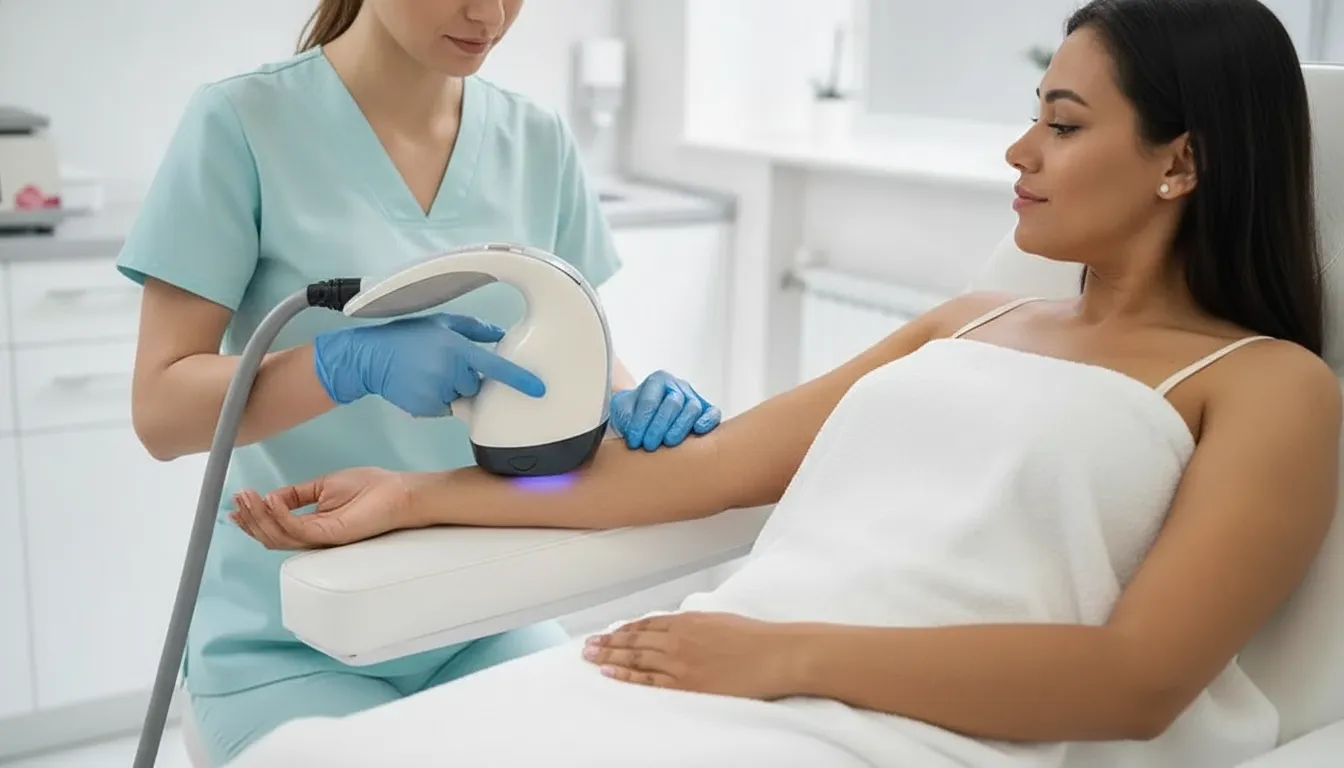
Patients with darker skin should be comfortable asking which wavelength will be used and how the provider plans to protect the surrounding skin. The advanced laser hair removal technology used at UIMS gives the treatment team more than one wavelength to consider, but the device itself does not determine the right plan. Your provider still needs to assess the area and adjust treatment parameters for you.
Hair color also affects the response. Laser energy is absorbed by melanin, and treatment tends to work best when there is clear contrast between hair and skin, such as dark hair against lighter skin. A review of laser hair-removal research has also found significant reductions in absolute hair counts after diode laser treatment at three- and six-month follow-ups. But results vary by technology, hair characteristics, and patient. Red, very light blond, gray, or white hair may respond less predictably because it contains less of the pigment the laser targets. A consultation can help clarify whether the hair in a particular area is a reasonable treatment target.
Common areas include the legs, underarms, upper lip, chin, and bikini line. Review laser hair removal treatment options with Ultimate Image MedSpa. You can discuss your skin type, goals, and appropriate settings.
Who Is a Good Candidate for Laser Hair Removal?
Many adults may be candidates for laser hair removal, including people seeking treatment for common areas such as the legs, underarms, upper lip, chin, or bikini line. The treatment works by directing light toward melanin in the hair, so the provider considers both the hair and the skin before selecting a treatment approach. A consultation is the right place to review your goals, medical history, medications, skin condition, and the area you want treated.
Laser hair removal is generally considered safe and effective, and most reported side effects are temporary rather than permanent. Still, candidacy is individual. A responsible provider should explain what the treatment can and cannot do for you instead of promising identical results for every patient. The goal is usually long-term hair reduction, not a guarantee that every hair will be removed forever. Some people need maintenance treatments as growth patterns change over time.
Hair color, skin tone, and expected response
Laser energy is attracted to pigment in the hair follicle. Treatment has traditionally been most effective when there is a clear contrast between hair color and skin color, such as dark hair and lighter skin. Very light blonde, white, and gray hair may contain too little pigment for the laser to target effectively. Red hair can also be less responsive because its type of melanin may not absorb enough laser energy to damage the follicle. These limitations do not mean you should rule yourself out without an assessment. Your provider can evaluate the hair in the specific treatment area and discuss whether laser treatment is likely to be useful.
Skin tone also matters when planning treatment, but it should not be treated as a simple yes-or-no screening question. The device, wavelength, settings, cooling approach, and provider experience all influence how a treatment plan is designed. At Ultimate Image MedSpa, the advanced laser hair removal technology used for treatment is selected with the patient’s skin and hair characteristics in mind. Individual settings and expectations require an in-person assessment.
Hormone-related hair growth is another reason a consultation matters. Conditions or hormonal changes can encourage new hair growth even after existing hair has been reduced. Laser treatment can address hair that is already present, but it does not correct an underlying hormonal imbalance. If new growth continues, your plan may include ongoing maintenance, and your provider may recommend discussing related concerns with a qualified healthcare professional. This is a reason to set realistic expectations, not a reason to assume treatment will fail.
A consultation can also identify areas that should not be treated. For example, laser hair removal is generally avoided on the eyelids, eyebrows, and surrounding areas, and treatment should not be performed over tattoos. Tell the provider about tattoos, recent tanning or sun exposure, skin conditions, medications, and any history of unusual skin reactions before treatment begins.
Use this checklist as a starting point, not a substitute for professional evaluation:
- You want long-term reduction in unwanted hair in an appropriate treatment area.
- You understand that results vary and maintenance may be needed.
- You are willing to share relevant health, medication, tanning, and skin history.
- You understand that hair color and pigment affect how well the laser can respond.
- You are prepared to follow personalized preparation and aftercare instructions.
If you are considering laser hair removal treatment in the DFW area, an evaluation can help you decide whether it fits your goals and what type of plan is appropriate.
What Should Texas Patients Expect Before, During, and After a Session?
A first appointment should feel structured, personal, and easy to understand. Your provider will review the area you want treated, your skin and hair characteristics, and your goals before deciding whether laser hair removal is appropriate. Because response varies by person, an individualized plan is more useful than a one-size-fits-all promise.
Begin with a consultation and skin assessment
Your visit typically starts with a conversation about the treatment area, your hair-growth pattern, previous hair-removal methods, and relevant health or skin concerns. The provider then examines your skin and hair to determine how the laser can be used safely and what kind of response may be realistic. This is also the time to ask about the device, expected sensations, scheduling, and the provider’s recommended plan. Laser hair removal works by directing light toward pigment in the hair, so your assessment helps the provider select appropriate settings for your individual needs.
Prepare the treatment area as directed
Your provider will explain how to prepare before the appointment. Shaving the area may be recommended so the laser can focus energy below the skin without excess hair on the surface. Follow the specific instructions you receive rather than relying on general advice from another clinic. Arrive with the area clean and tell the provider about recent tanning, irritation, medications, or changes in your skin. Those details can affect whether treatment should proceed that day.
Settle in for treatment with cooling and comfort checks
During the session, you will be positioned so the provider can access the treatment area and protect nearby skin as needed. The laser delivers a series of pulses over the selected area. You may notice warmth, a snapping sensation, or brief discomfort as pulses are delivered. At Ultimate Image MedSpa, the Candela GentleMax Pro uses dynamic cooling to help support patient comfort. Your provider can also check in during the appointment and adjust the approach when appropriate. Speak up if the sensation feels unusually intense or if you have a concern.

A professional treatment uses protective eyewear and an individualized approach. Expect temporary skin changes afterward
It is common for treated skin to look mildly red or feel warm for a short time after a session. These temporary changes should be discussed with your provider, especially if they seem more pronounced than expected or do not improve. The goal is gradual reduction in unwanted hair, not an instant change after one appointment. Because hair grows in cycles, only some follicles are in the ideal phase for treatment at a given visit.
Follow your provider’s aftercare guidance
Aftercare instructions should be specific to your skin, treatment area, and settings. In general, protect the treated skin and avoid anything your provider tells you to pause while the area settles. Ask when it is appropriate to resume your usual products, exercise, sun exposure, or other activities. Do not add extra treatments or use unfamiliar products without checking first. If you notice an unexpected reaction, contact the treating practice promptly for guidance.
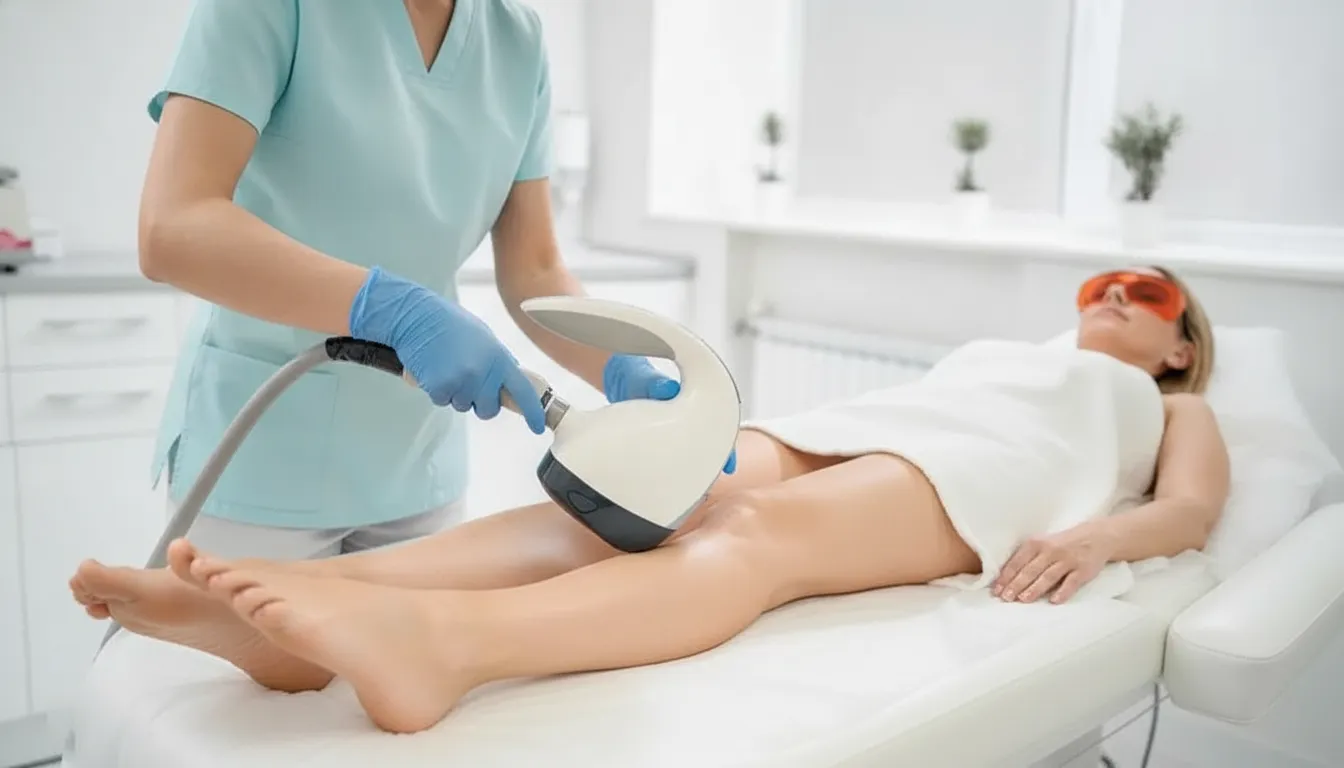
A consultation is the best way to turn general information about laser hair removal treatment into a plan for your skin, hair, and goals in the DFW area.
How Many Sessions Are Needed, and What Affects Cost?
Most people need a series of laser hair removal appointments rather than one treatment. UIMS guidance places a complete series at approximately four to ten sessions, with treatments commonly spaced four to eight weeks apart. That range is not a promise or a fixed schedule. Hair grows in cycles, and the laser is most effective when targeted hairs are in the active growth phase. Your provider can recommend timing based on the treatment area, hair pattern, skin response, and progress between visits.
Laser hair removal is best understood as long-term hair reduction, not a guarantee that every hair will be gone forever. Hair growth can return over time, so some patients choose maintenance sessions after their initial series. Hormonal factors or an underlying medical condition may also contribute to new growth and make ongoing maintenance more likely. A consultation helps separate a realistic treatment plan from a generic session package.
| Treatment factor | What it changes | What a consultation determines |
|---|---|---|
| Area being treated | The size and location of the area affect appointment time and the amount of work involved. | Which areas are appropriate, how they will be scheduled, and how much time each visit may require. |
| Hair color and density | Laser energy is absorbed by pigment. Darker hair often provides a stronger target, while red hair may respond less reliably. | Whether your hair is a suitable target and what level of reduction may be realistic. |
| Growth cycle and response | Different hairs are active at different times, and individual response varies across a treatment series. | How far apart to schedule visits and whether the plan should be adjusted as results develop. |
| Hormonal or medical factors | New hair growth may continue despite treating existing hair, which can increase the need for maintenance. | Whether additional evaluation or a longer-term maintenance approach should be discussed. |
Cost should be evaluated alongside the treatment area, expected number of visits, technology, and the provider’s assessment process. UIMS uses the Candela GentleMax Pro, a dual-wavelength system, and creates an individualized plan rather than assuming every patient needs the same number of sessions. Because package availability and pricing can change, the most accurate estimate comes from the current consultation and treatment plan. If you are comparing laser hair removal Texas providers, ask what is included, how follow-up visits are handled, and whether maintenance is discussed upfront.
How Should Laser Hair Removal Texas Patients Choose a DFW Provider?
For patients comparing laser hair removal Texas providers, the best choice is not necessarily the closest advertisement or the lowest introductory price. Look for a medical aesthetics practice that can explain its technology, assess your skin and hair characteristics, and set realistic expectations for the treatment plan. A consultation should feel educational, not rushed or pressure-filled.
DFW patients should also confirm where a provider actually operates. Ultimate Image MedSpa is based in the Dallas-Fort Worth area, with locations in Plano, Dallas, Lewisville, and Richardson. This local footprint gives patients options for scheduling while keeping care within the metro area. The practice has nearly 15 years of experience and uses FDA-cleared, medical-grade equipment, with treatments performed by licensed professionals.
Technology matters because laser hair removal depends on delivering the right wavelength and energy for the individual patient. Ultimate Image MedSpa uses the Candela GentleMax Pro, a dual-wavelength system designed to support treatment planning across a range of skin types. Patients who want to understand the platform in more detail can review this guide to advanced laser hair removal technology before scheduling.
Provider checklist for DFW laser hair removal
- Verify the treatment team. Ask who performs the treatment and confirm that licensed professionals oversee the service.
- Ask which device will be used. A reputable provider should identify the laser platform and explain why it fits your needs, rather than making vague claims about permanent results.
- Request an individualized assessment. Skin tone, hair color, treatment area, medications, tanning history, and health factors can affect candidacy and settings. A responsible provider will not promise identical results for every patient.
- Discuss the full plan. Ask about expected sessions, timing, preparation, possible temporary skin reactions, and whether maintenance may be appropriate. Laser hair removal reduces growth, but it is not a guarantee that every hair will be gone permanently.
- Look for transparent local information. The practice should clearly state its locations, treatment details, and how to contact the team. It should not imply statewide offices or services that it does not provide.
If Dallas is the most convenient location, explore the Dallas laser hair removal service page for location-specific information. You can also read the Dallas laser hair removal guide for a more detailed local overview. These pages complement this broader Texas guide by addressing the DFW setting without suggesting that one provider serves every part of the state.
Book your consultation to discuss your DFW treatment plan
Ready to plan laser hair removal in Texas? Book your consultation with Ultimate Image MedSpa.
Choose the right starting point: This DFW guide is for planning and comparison. For provider-specific treatment details, review our laser hair removal treatment service page, then use the consultation form to discuss your skin type, hair characteristics, and goals.
Frequently Asked Questions
How many laser hair removal sessions are usually needed?
Most patients need a series rather than one appointment. UIMS materials describe a typical plan of 4 to 10 sessions, spaced about 4 to 8 weeks apart. The exact schedule depends on the treatment area, hair-growth cycle, hair characteristics, and your response to treatment. Your provider can refine the plan after assessing your skin and hair in person.
Is laser hair removal permanent?
Laser treatment is best understood as long-term hair reduction, not a guarantee that every hair will disappear forever. It damages targeted follicles and can greatly reduce future growth, but some hair may return over time. Maintenance sessions may be useful, especially when hormonal changes contribute to new growth. See the Mayo Clinic overview for additional medical context.
Can laser hair removal treat different skin tones?
Yes, but the laser and settings must be selected carefully for your skin tone and hair. Ultimate Image MedSpa uses the Candela GentleMax Pro, which combines 755 nm Alexandrite and 1064 nm Nd:YAG wavelengths and is FDA-cleared for Fitzpatrick skin types I through VI. A consultation helps determine the safest, most appropriate approach for your specific skin and hair profile.
Is laser hair removal painful?
Comfort varies by person and treatment area, but sessions are generally designed to be manageable and efficient. UIMS uses Dynamic Cooling Device technology to cool the skin during treatment. You may notice brief warmth or a snapping sensation, and your provider can adjust the treatment approach when needed. Sharing your comfort level during the appointment helps the provider keep the experience as comfortable as possible.
Book your consultation for laser hair removal
A consultation can help you understand whether laser hair removal fits your goals, skin type, hair characteristics, and treatment area. You can ask questions, discuss what to expect, and receive guidance based on an individual assessment rather than a one-size-fits-all plan. If you are considering treatment in the DFW area, book your consultation with Ultimate Image MedSpa.