
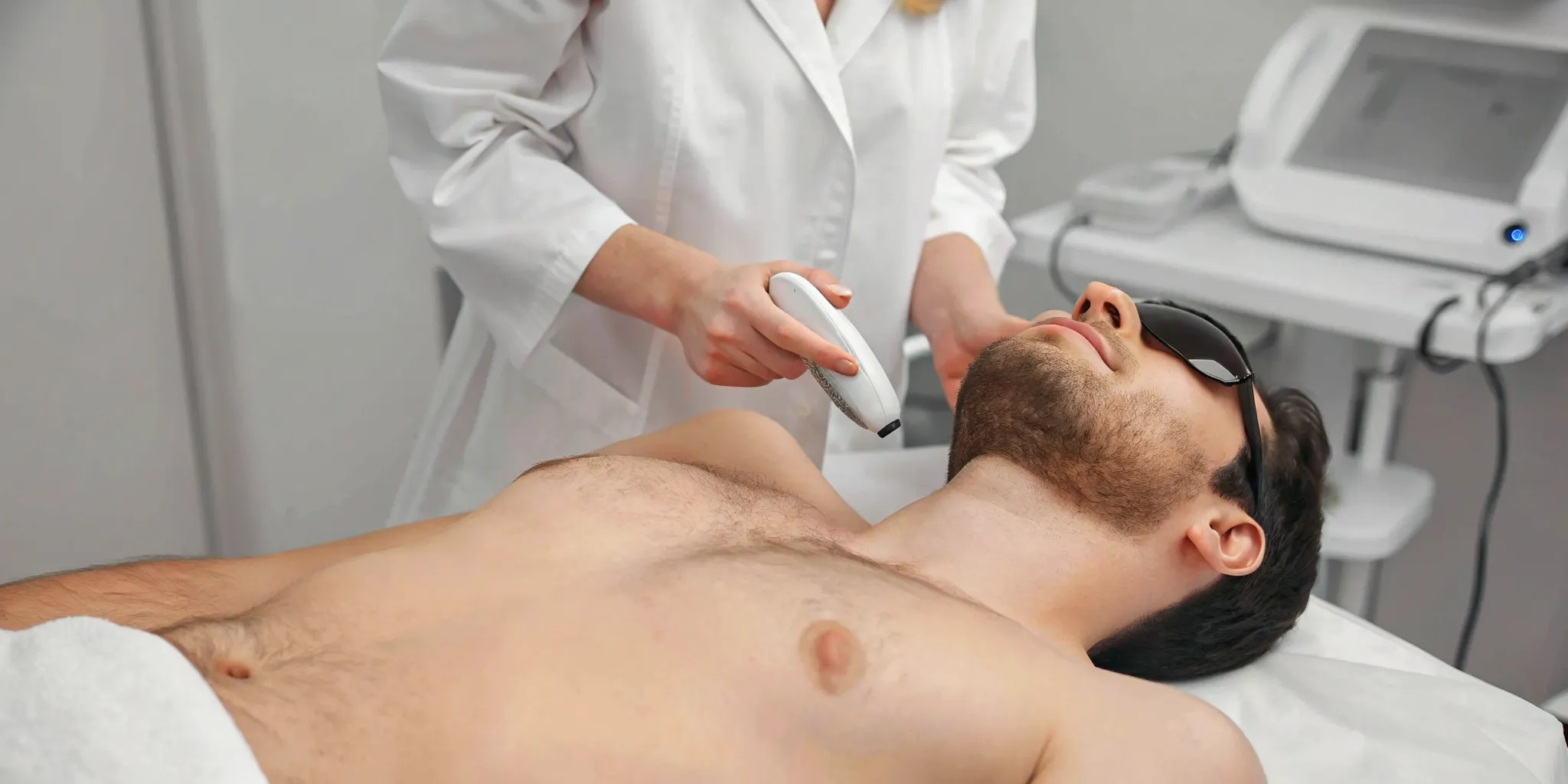
For many men, unwanted hair is less about appearance alone and more about comfort, time, and confidence. Shaving a broad chest or back can be difficult to maintain, while waxing may be uncomfortable and temporary. Medical hair removal has also become a common entry point into aesthetic care for men. And industry data places laser hair removal among the three most popular treatments across male age groups.
Laser hair removal for men uses focused light to target pigment in the hair follicle, helping reduce unwanted hair over a series of professionally planned treatments. It may be used for areas such as the back, chest, neck, shoulders, or face. But candidacy, hair color, skin tone, treatment settings, cost, and expected results should be assessed individually.
Understanding why demand is increasing provides useful context before comparing treatment areas, reviewing how the technology works. And deciding whether professional care or an at-home device better fits your goals.
Why Are More Men Choosing Laser Hair Removal?
Ultimate Image MedSpa reports that men represent a growing share of patients seeking laser hair removal for men. Drawn by the convenience of long-term hair reduction compared with shaving or waxing. Industry data shows aesthetic healthcare among men has surged. With male patients in their 40s and 50s increasing approximately 4.5 times over the past decade at clinics supported by SBC Medical.
Men’s interest in aesthetic care has moved well beyond a niche trend. Industry reporting from SBC Holdings describes medical hair removal as a common entry point for male patients, while demand for aesthetic healthcare among men continues to grow. Laser hair removal ranks among the three most popular treatments for male customers across age groups, suggesting that the interest is not limited to one generation. SBC Holdings reports on the growth in male aesthetic care.
The change is especially visible among older men. The number of male customers in their 40s and 50s at clinics supported by SBC Medical grew approximately 4.5 times over the past decade. At the other end of the age range, men in their 20s are accessing aesthetic healthcare at rates that rival women. Together, these trends point to a broader shift: professional grooming and appearance-related care are becoming more accepted forms of personal care for men.
Convenience is part of the appeal
Shaving, trimming, and waxing can require ongoing time and attention, particularly when unwanted hair is dense or grows across larger areas. Many men explore treatment because they want a more convenient approach to reducing hair on the chest, back, neck, shoulders, or selected facial areas. Laser treatment is designed to provide longer-term hair reduction than temporary grooming methods, although it does not guarantee that every hair will be permanently removed. Most patients need multiple sessions, and some may need maintenance treatments as hair regrows.
Men still need an individualized plan
Growing demand does not mean every patient should receive the same settings or treatment schedule. Hair color, density, skin tone, medical history, and the area being treated all matter. A professional assessment helps determine whether treatment is appropriate and how it should be tailored. Laser hair removal can be performed for people across Fitzpatrick skin types I through VI when the technology and settings are selected carefully. But candidacy and expected results vary.
Ultimate Image MedSpa has served the Dallas-Fort Worth area for nearly 15 years, with locations in Dallas, Plano, Richardson, and Lewisville. Men considering treatment can review the local laser hair removal service information and discuss their goals with a licensed professional before beginning a plan.
How Does Laser Hair Removal Work on Men’s Hair?
Laser hair removal for men works by delivering controlled light energy to melanin in the hair shaft and follicle. The heat produced damages the follicle and reduces its ability to produce hair over time. At Ultimate Image MedSpa, the Candela GentleMax Pro uses dual-wavelength technology to treat a range of skin types and hair characteristics.
Men’s hair is often coarser and denser than hair in many women’s treatment areas, which can make professional assessment especially important. Laser hair removal uses a focused beam of light to create heat in the follicle and damage it, reducing the follicle’s ability to produce hair over time. The goal is long-term hair reduction, not an overnight change. Laser hair removal is a medical procedure, so treatment should be planned around your skin, hair, and health history.
How the laser targets coarse hair
The laser is attracted to melanin, the pigment in the hair. Medical references describe wavelengths ranging from 600 to 1200 nanometers as targeting melanin in the hair shaft, follicular epithelium, and hair matrix. When the hair absorbs the light, the resulting heat can damage the follicle while the surrounding skin is protected as carefully as possible through appropriate technology and settings. A clear contrast between hair pigment and skin pigment generally makes treatment more effective because the laser can distinguish its target more readily.
That does not mean every man’s treatment plan is the same. Hair color, density, skin tone, the area being treated, and prior tanning can all affect how a provider approaches the session. Very light, gray, white, or red hair may respond less reliably because it contains less of the type of pigment the laser uses. A professional evaluation helps determine whether laser treatment is appropriate and how to approach candidacy safely.
Why several sessions are usually needed
Hair grows in cycles, and follicles are not all active at the same time. Laser energy is most useful when a follicle is in a phase that makes the hair an effective target. Because different follicles reach that phase at different times, most patients need multiple sessions rather than one treatment. The spacing between sessions is selected according to the treatment area and your observed growth pattern.
Ultimate Image MedSpa uses the Candela GentleMax Pro, which has dual-wavelength capability. Your provider determines the appropriate approach and settings during a professional assessment, with attention to skin tone and hair characteristics. Even after a series, some regrowth can occur, and occasional maintenance treatments may be recommended. Results vary, but a personalized plan can make the process more predictable and support safer, more consistent hair reduction.
What Treatment Areas Are Most Popular for Men?
The most common treatment areas for men seeking laser hair removal include the back, chest, shoulders, neck, and beard area. At Ultimate Image MedSpa, treatment planning considers your skin tone, hair characteristics. And goals using the Candela GentleMax Pro, which can treat all Fitzpatrick skin types I-VI when appropriate.
Men often begin with areas where shaving, trimming, or waxing is time-consuming. The chest, back, and neck are common choices, but a personalized plan can address several areas during a broader grooming routine. At Ultimate Image MedSpa, treatment planning considers your skin tone, hair characteristics, and goals. The practice uses the Candela GentleMax Pro and treats all Fitzpatrick skin types I-VI when appropriate for treatment.
Chest, abdomen, back, and shoulders
Chest and abdomen treatments may help create a cleaner, more even appearance while preserving as much or as little hair as you prefer. Back and shoulder sessions are popular for men who want to reduce dense growth that is difficult to manage at home. Because these are larger areas, treatment time depends on surface area, hair density, and whether several zones are combined. You may feel brief warmth or a snapping sensation as each pulse is delivered, followed by temporary redness or sensitivity.
Beard, neck, and neckline
Laser treatment around the beard or neckline can help reduce frequent shaving and irritation, or sharpen the boundary between facial hair and the neck. Facial areas are smaller, but they can feel more sensitive than the back or torso. Your provider can discuss whether you want a defined neckline, reduced density, or a plan focused on unwanted growth. A careful assessment is important before treating any facial area.
Arms, legs, and intimate areas
Arms and legs may be selected for overall hair reduction, easier maintenance, or athletic grooming preferences. The time and sensation vary by area and hair density. Intimate treatment areas can include a Brazilian for men, with the exact boundaries established privately during consultation. Discuss comfort, modesty, and your preferred result before beginning so the plan is clear.
Most body areas can be treated, but laser hair removal is generally not used on the eyelids. Eyebrows, surrounding areas, or tattooed skin because of potential damage, according to the Mayo Clinic’s laser hair removal guidance. A consultation can help determine which areas are appropriate and estimate the session time for your goals. You can review the laser hair removal service available to DFW-area clients.
How Much Does Laser Hair Removal Cost for Men?
Laser hair removal cost for men varies by treatment area size, hair density, and the number of sessions needed. At Ultimate Image MedSpa, new-client six-session pricing has historically started at $129 for small areas. $279 for medium areas, and $429 for large areas, with a free consultation to establish a personalized estimate.
The cost of laser hair removal depends on the size of the treatment area, hair density, and how many sessions your plan requires. Many clients need about 6 to 8 sessions per area, although your provider may recommend a different schedule after assessing your skin and hair. At Ultimate Image MedSpa, new-client pricing is available to first-time clients and is structured by treatment-area size:
| Treatment area | Six-session price | Previous price | What it may suit |
|---|---|---|---|
| Small area | $129 | $450 | Smaller facial or body areas |
| Medium area | $279 | $900 | Moderate-size treatment areas |
| Large area | $429 | $1,800 | Chest, back, or other larger areas |
These prices represent six sessions, not a promise that every person will need exactly six. Coarser or denser hair, the treatment area, hair-growth cycles, and individual response can affect the number of sessions and whether occasional maintenance is appropriate. A consultation helps establish a more realistic estimate before you commit to a plan.
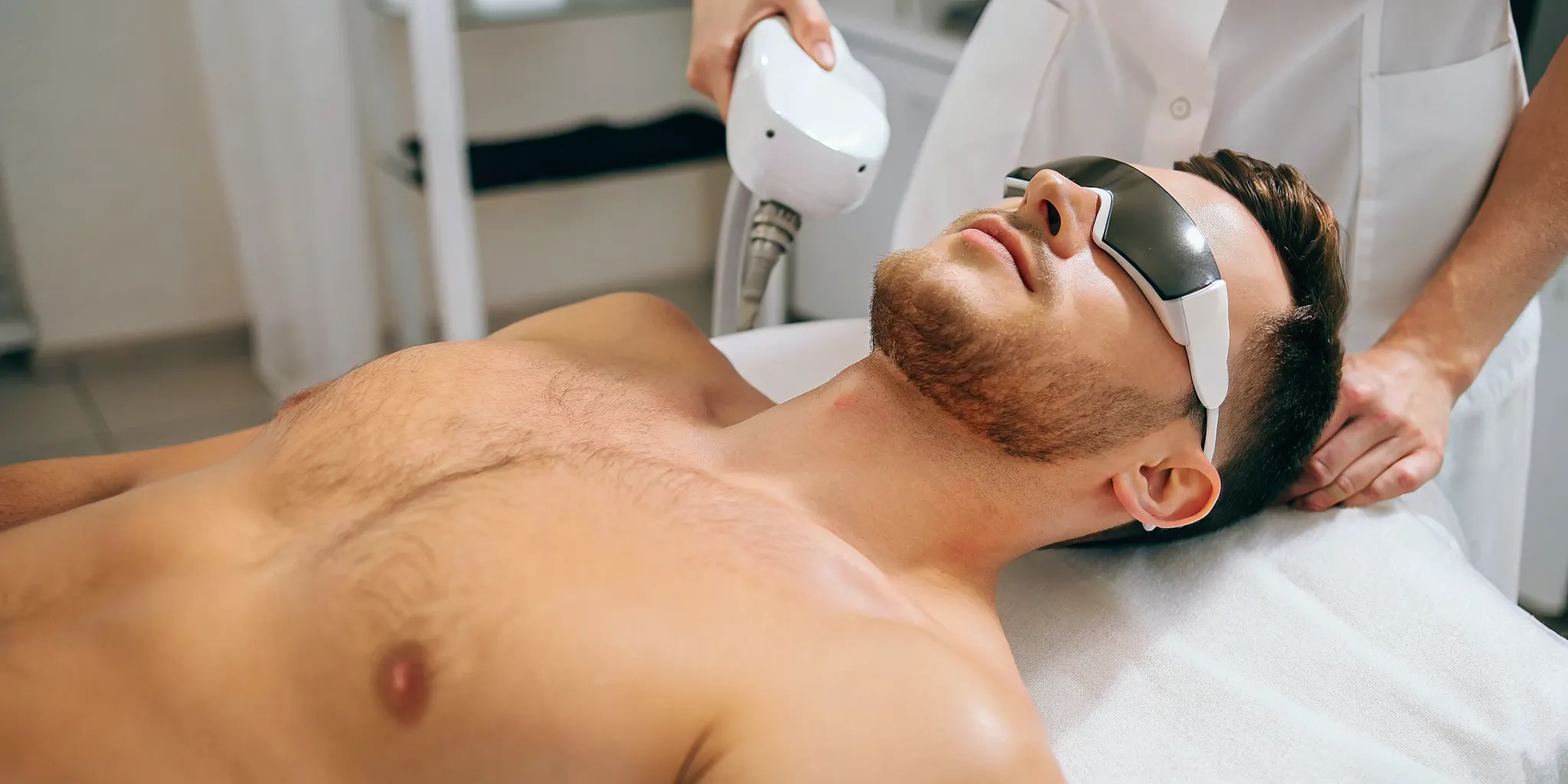
How does the investment compare with shaving or waxing?
Shaving usually means repeatedly purchasing razors, replacement blades, shaving cream, and other supplies. Waxing involves recurring appointments and can add up as long as the treatment continues. Laser treatment is a larger upfront investment, but it is designed for longer-term hair reduction rather than a temporary result. Medical references identify laser and intense pulsed light systems as among the more effective options for long-term hair reduction compared with temporary methods such as shaving and waxing. Review the clinical overview of hair-removal options for additional context.
For men comparing options in the Dallas-Fort Worth area, a professional assessment can help you weigh the area you want treated. Your expected session count, and your comfort with an upfront package. Results vary, and candidacy should be confirmed before treatment.
Is Professional Laser Treatment Better Than At-Home Devices for Men?
Professional laser hair removal at a medical spa like Ultimate Image MedSpa delivers more controlled energy and individualized treatment planning than at-home IPL devices. For men with coarse or dense hair and darker skin tones, professional assessment and medical-grade technology such as the Candela GentleMax Pro help support safer, more effective results.
Shaving is familiar and inexpensive, but it only cuts hair at the skin’s surface. Stubble can return quickly, and frequent shaving may leave some men dealing with razor burn, nicks, or ingrown hairs. Waxing removes hair from the root, but the process can be uncomfortable and regrowth still requires repeat appointments. Neither method is designed to provide long-term hair reduction.
At-home IPL devices may seem convenient, but their lower energy and limited settings can make them less effective for thick body hair or coarse facial hair. They also may not provide the precision needed for different treatment areas and skin tones. At-home results vary, so following the manufacturer’s directions and checking whether the device is appropriate for your skin and hair is important.
Why professional assessment matters
A professional consultation is especially important for men with darker skin. Black and brown skin contains more pigment. So the laser type and energy settings must be selected carefully to reduce the risk of burns or lasting skin color changes. Mayo Clinic notes that treatment can be performed safely on darker skin when an experienced healthcare professional uses the appropriate laser and settings. At Ultimate Image MedSpa, treatment planning is individualized for skin type, hair characteristics, treatment area, and personal goals.
Hair color also affects candidacy. Laser hair removal is generally less effective on blonde, white, gray, and red hair because those colors contain less of the pigment the laser targets. A consultation can help determine whether professional laser treatment is a reasonable option or whether another approach may be more appropriate.
Professional laser treatment for longer-term reduction
Professional lasers deliver more controlled energy than typical home devices, and medical literature identifies laser and IPL systems as among the most effective options for long-term hair reduction. Results are not immediate or guaranteed. Most people need multiple sessions because hair grows in cycles, and some regrowth or maintenance treatment may occur over time.
For men considering a more individualized approach to chest, back, neck, or facial grooming, laser hair removal at a DFW med spa can provide professional evaluation and a treatment plan based on your needs.
How Should Men Prepare for Their First Laser Hair Removal Session?
Preparing for laser hair removal for men involves scheduling a professional consultation, shaving the area about 24 hours beforehand. Avoiding waxing or plucking for at least four weeks, and limiting sun exposure for two weeks before treatment. Following these steps helps your provider assess the area and tailor the session safely.
A little preparation helps your provider assess the treatment area and tailor the session to your skin, hair, and treatment plan. Use these steps before your appointment.

- Schedule a professional consultation first. Share your goals, prior hair-removal methods, skin history, and any medical conditions or medications. A professional assessment matters because safety and expected results depend on factors such as skin color and the treatment plan. Ultimate Image MedSpa offers free consultations to help determine candidacy and plan treatment for men across the Dallas-Fort Worth area. You can also review what to expect during your first med spa visit.
- Shave the area about 24 hours beforehand. Shaving leaves the hair beneath the skin so the laser can target the follicle without unnecessary surface hair. Avoid waxing, tweezing, or plucking, which removes the hair from the follicle and can interfere with treatment.
- Stop waxing or plucking at least four weeks before treatment. If you have been using these methods, ask your provider when to schedule your first session. Do not switch to a different hair-removal method without discussing it during your consultation.
- Avoid sun exposure and tanning for two weeks beforehand. Tanned or recently sun-exposed skin may affect treatment planning and increase the risk of unwanted skin reactions. Tell your provider about recent sun exposure, tanning beds, or self-tanner before the session.
- Arrive with clean, product-free skin. Wash the treatment area and leave off lotions, oils, deodorant, and other products unless your provider gives different instructions. Wear comfortable clothing that will not rub the area after treatment.
- Plan gentle aftercare for the first 24 to 48 hours. Avoid direct sun, excessive heat, and tight clothing that could irritate the treated skin. Mild irritation, swelling, discomfort, or temporary color changes can occur and are commonly short-lived, according to the Mayo Clinic. For more details, read aftercare for laser hair removal and what to expect for laser hair removal side effects. Contact your provider if a reaction seems severe or does not improve as expected.
Frequently Asked Questions
Is laser hair removal safe for men?
It can be safe when a qualified professional assesses your skin, hair, treatment area, and medical history before choosing the settings. Men with darker skin tones can be treated, but the laser type and energy level require careful selection to reduce the risk of burns or lasting pigment changes. Mild irritation, swelling, discomfort, or temporary color changes may occur after treatment and usually resolve within hours. Mayo Clinic explains laser hair removal safety and side effects.
How much does laser hair removal for men cost?
Cost depends mainly on the size of the treatment area and the number of sessions in your plan. At Ultimate Image MedSpa, six-session pricing has historically started at $129 for a small area, $279 for a medium area, and $429 for a large area. A consultation gives you a more useful estimate because hair density, treatment goals, and the areas you want treated can affect the recommended plan.
How many sessions do men usually need?
Most patients need several sessions because laser treatment works on hair during particular stages of its growth cycle. Your schedule depends on the area, hair characteristics, skin type, and how your hair responds. A provider may recommend a series of treatments followed by occasional maintenance sessions. There is no reliable way to promise one exact session count for every man. Mayo Clinic notes that multiple treatments and follow-up may be needed.
Will laser hair removal permanently remove all men’s hair?
Laser hair removal is designed for long-term hair reduction, not a guarantee that every hair will be gone forever. Many men see substantial reduction, but some hair may regrow over time and may require maintenance treatment. Results can be less predictable when hair is blonde, white, gray, or red because those colors may not absorb laser energy as effectively as pigmented hair. Individual results vary, so candidacy should be discussed during a professional consultation.
Ready to Book Your Consultation?
A personalized consultation can help you understand whether laser hair removal fits your goals, treatment areas, and skin type. The team at Ultimate Image MedSpa can discuss your options and outline practical next steps for treatment in the DFW area. When you are ready, book your consultation for laser hair removal online.