
Men in Dallas are not limited to one reason for visiting a med spa. You may want to reduce back hair, improve uneven skin texture, fade an unwanted tattoo, or refine a stubborn area without surgery. The right treatment depends on your goal, skin and hair characteristics, schedule, and comfort preferences.

The best men’s med spa treatments dallas patients choose are the ones matched to a specific concern and planned with realistic expectations. Options may include laser hair removal, customizable skin treatments, picosecond tattoo removal, and UltraShape non-surgical fat reduction. A consultation can help determine candidacy, likely session timing, preparation, and appropriate alternatives.
Ultimate Image MedSpa serves Dallas and the wider DFW area with medical-grade technology and licensed professionals. Understanding what each treatment is designed to address makes it easier to compare options thoughtfully. Start with the services men commonly consider and how each one fits a different aesthetic goal.
What Can Men Do at a Med Spa?
Men considering aesthetic care do not have to choose between a single concern and an overly complicated treatment plan. A medical spa can help address unwanted hair, visible tattoos, skin texture, and localized body concerns through a combination of focused, non-surgical services. The right starting point depends on the result you want, your skin and hair characteristics, your schedule, and your medical history.
Laser services for hair and tattoo concerns
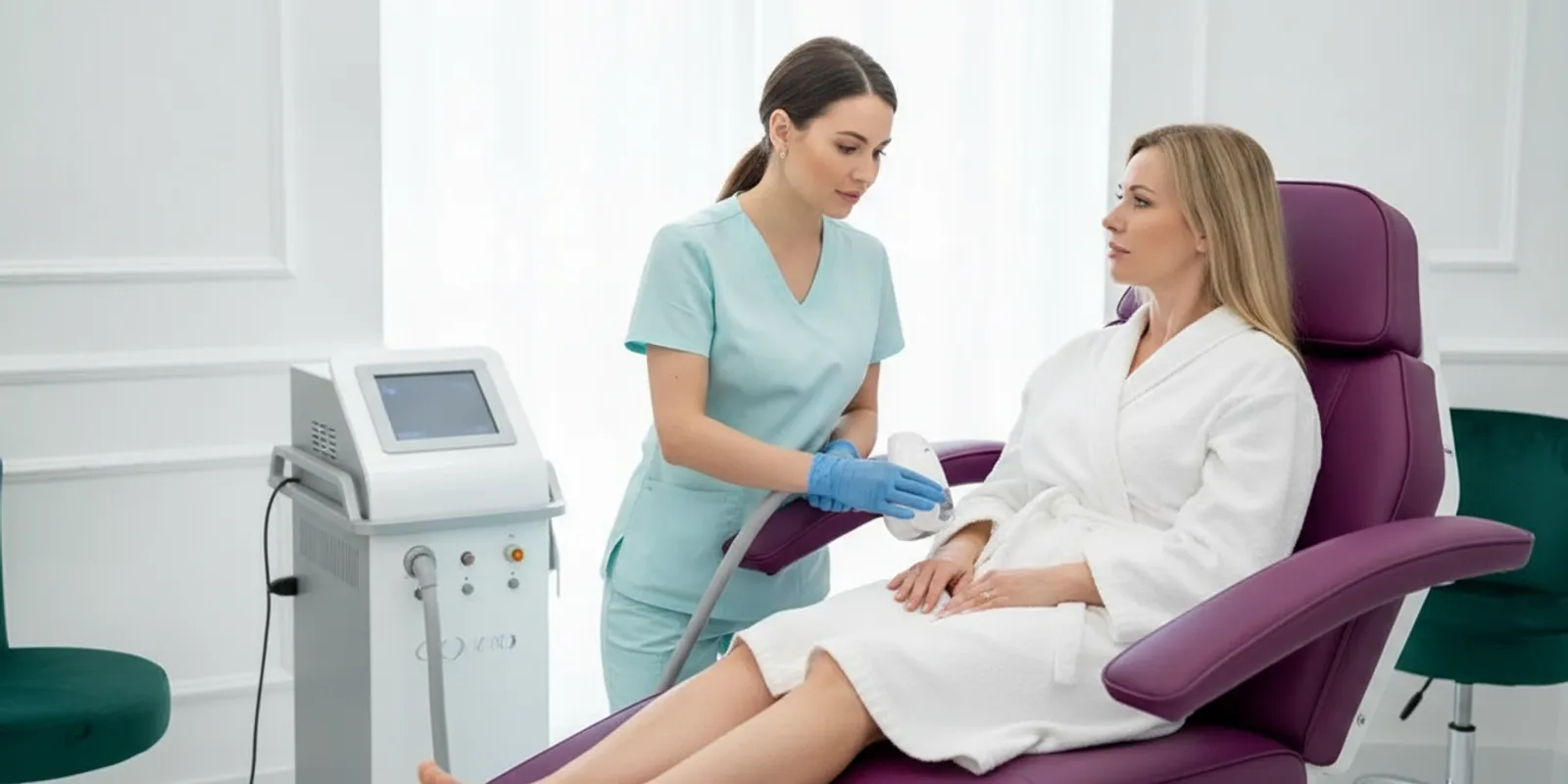
Laser hair removal is often a practical choice for men who are tired of frequent shaving, razor burn, or ingrown hairs. At Ultimate Image MedSpa, the documented system is the FDA-approved Candela GentleMax Pro. It combines 755nm Alexandrite and 1064nm Nd:YAG wavelengths with Dynamic Cryogen Device cooling. Treatment areas may include the chest, back, shoulders, arms, face, and other areas where unwanted hair is a concern.
A typical plan generally involves four to ten sessions spaced about four to eight weeks apart. That timeline reflects the hair-growth cycle, so it is important to think in terms of progressive reduction rather than a one-time result. Learn more about the laser hair removal treatment before deciding which areas to discuss at a consultation.
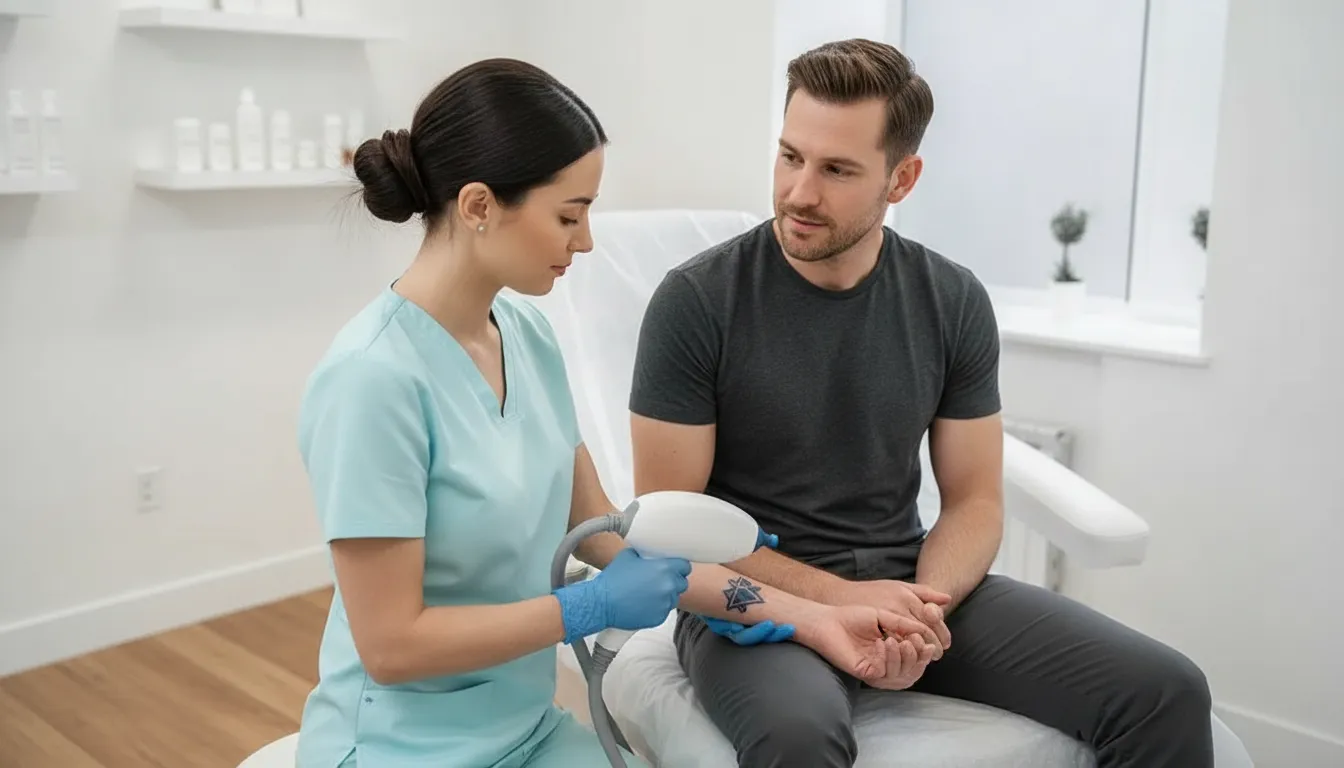
Tattoo removal is another laser-focused option. PicoWay picosecond technology uses rapid pulses and multiple wavelengths to fragment tattoo ink. The number of sessions varies with the tattoo’s age, location, depth, size, color, and type. Treatments are commonly spaced six to eight weeks apart, and a consultation is necessary to assess the tattoo and set realistic expectations. This is different from promising complete clearance, which cannot be guaranteed.
Skin rejuvenation for a healthier appearance
Skin treatments can address concerns that are not limited to one gender, including dehydration, pigmentation, acne, fine lines, and uneven texture. HydraFacial is described as customizable, suitable for all skin types, and designed without downtime. Other treatment choices may be considered for specific texture or aging goals, but the best option depends on your skin condition, sensitivity, sun exposure, and desired recovery time. A provider should explain what each treatment can and cannot reasonably accomplish.
Body contouring for localized concerns
Body contouring is intended for shaping specific areas, not general weight loss. UltraShape is Ultimate Image MedSpa’s FDA-approved ultrasound fat-reduction service. It is a non-surgical option that may be discussed when a person is at a relatively stable weight but wants to address localized fat concerns. It should not be confused with CoolSculpting, which is not an Ultimate Image MedSpa service.
These categories are a useful map, not a substitute for individualized guidance. Review the full range of med spa services, then use a consultation to match your goals with appropriate technology, timing, and maintenance expectations.
Choosing Among Men’s Med Spa Treatments Dallas Patients Can Consider
The right treatment depends less on a trend and more on the result you want, your health history, and how the plan fits your life. Use this decision process to narrow the options before your appointment.
Define the goal in practical terms. Start with the change you want to see or feel. That might mean reducing unwanted chest or back hair, improving the appearance of a tattoo, refreshing skin, or addressing a localized body-contouring concern. Be specific about the area and the outcome you hope to achieve, but keep expectations realistic. For example, laser hair removal is intended to reduce unwanted hair, not promise permanent total removal. A treatment plan for facial lines will also differ from one designed for skin texture or body contouring.
Review candidacy and medical history. Your skin type, sensitivity, previous treatments, medications, allergies, sun exposure, and relevant medical conditions can affect which options are appropriate. A qualified provider should also discuss contraindications and alternatives rather than assuming a treatment is suitable. At Ultimate Image MedSpa, the complimentary consultation includes a medical-history review, skin-type assessment, candidacy evaluation, and customized recommendations. This is especially important for laser and light-based procedures, where settings and protocols should be selected for the individual rather than copied from another patient.
Match the plan to your schedule and tolerance for downtime. Ask how many visits are typical, how far apart they are, and what recovery may look like. Laser hair removal commonly involves multiple sessions because follicles respond during specific growth stages. Tattoo removal also requires spaced treatments, with timing and total sessions varying by the tattoo’s size, color, depth, age, and location. If your schedule is tight, a no-downtime option such as a customizable HydraFacial may be worth discussing. Your provider can help distinguish a convenient appointment from a plan that requires meaningful recovery or ongoing maintenance.
Assess the provider and technology. Look for licensed professionals, medically appropriate equipment, and a clear explanation of why a specific system fits your needs. Ask who performs the treatment, how your skin type is considered, what cooling or comfort measures are available, and how results will be assessed. For example, Ultimate Image MedSpa documents the Candela GentleMax Pro for laser hair removal, with 755nm Alexandrite and 1064nm Nd:YAG wavelengths plus Dynamic Cryogen Device cooling. Technology matters, but the provider’s training, settings, and treatment judgment matter just as much.
Bring focused questions to the consultation. Ask, “Am I a candidate. And what alternatives should I consider?” Follow with. “What timeline and number of sessions are realistic for my goal?” You can also ask about preparation. Sensation, possible side effects, aftercare, maintenance, and what would cause the plan to change. Reviewing what to expect at a med spa before you arrive can help you organize those questions. A thorough consultation should leave you with a clear recommendation, expected timeline, and enough information to make an informed decision without pressure.
Is Laser Hair Removal a Good Fit for Men?
For many men, the decision is less about removing every hair and more about making grooming easier, reducing irritation, or creating a cleaner look across larger areas. The chest, back, and shoulders are common treatment areas, particularly for people who are tired of frequent shaving, waxing, razor burn, or recurring ingrown hairs. Laser hair removal may be worth considering when the goal is longer-lasting reduction and a practical maintenance plan rather than a promise of total, permanent hair removal.
At Ultimate Image MedSpa, treatment uses the Candela GentleMax Pro system. It combines a 755nm Alexandrite wavelength with a 1064nm Nd:YAG wavelength, giving a licensed professional options for tailoring treatment to the individual. The system also uses Dynamic Cryogen Device, or DCD, cooling. That cooling can help make the experience more comfortable, although patients commonly describe the laser sensation as similar to a rubber-band snap. You can review the laser hair removal treatment page for more detail about the technology and treatment areas.
What affects candidacy?
Hair and skin characteristics both matter. Because laser energy targets pigment in the hair, darker hair generally responds more readily than very light, gray, or white hair. Skin tone also needs to be considered carefully. The GentleMax Pro system combines two wavelengths and is documented for Fitzpatrick skin types I through VI. The appropriate settings and approach still depend on an in-person assessment. A darker skin tone does not automatically rule out treatment, and a lighter skin tone does not automatically guarantee a particular outcome.
A consultation should also account for recent sun exposure, skin sensitivity, medical history, medications, previous reactions, and the condition of the treatment area. Chest, back, and shoulder hair can vary considerably in density and growth pattern. A provider should evaluate the specific areas rather than make a broad estimate based only on photographs or a general package description.
What should men expect from the process?
Hair grows in cycles, and laser treatment is most effective when follicles are in an active growth stage. For that reason, a series is normally needed. UIMS documentation describes a general plan of four to ten sessions spaced about four to eight weeks apart. The actual schedule and number of visits can vary by area, hair characteristics, skin response, and treatment goals. Before a visit, patients may be advised to shave the area, avoid sun exposure, and arrive with clean skin.
Results should be framed as reduction, not erasure. The documented outcome after a complete series is 70 to 90 percent permanent hair reduction, with occasional maintenance potentially needed. Some men may want substantial reduction while keeping a natural amount of hair on the chest or shoulders. Others may prioritize fewer ingrown hairs or less daily grooming. Sharing that preference during the consultation helps shape a plan that fits the desired appearance, schedule, and comfort level. For a more focused overview, explore men’s laser hair removal in DFW.
What Skin Treatments Do Men Commonly Consider?
Skin goals vary widely. Some men want a quick refresh before an event, while others are more concerned with uneven texture, acne-related changes, pigmentation, or visible expression lines. The right choice depends on the condition being addressed, your skin type and sensitivity. The recovery time you can accommodate, and whether a treatment can be safely customized for you. A consultation is more useful than choosing a procedure by name alone.
HydraFacial is often considered when the priority is a clean, hydrated, more refreshed appearance with no planned downtime. The treatment is described as customizable and suitable for all skin types, with options that may address hydration, pigmentation, fine lines, acne, and general anti-aging goals. It can be a practical option for someone who wants skin care that fits around a busy schedule.
| Treatment | May suit | Planning notes |
|---|---|---|
| HydraFacial | Hydration, a refreshed appearance, congestion, pigmentation, or fine lines | Customizable and documented as a no-downtime option. Ask which elements fit your skin goals. |
| SkinPen microneedling | Uneven skin texture and concerns that may benefit from collagen-focused resurfacing | Plan for temporary redness. The customer guidance describes typical redness lasting 24 to 48 hours. |
| VI Peel | People exploring a professional peel for tone or texture | Recovery depends on formulation, skin condition, sensitivity, and provider instructions. |
| eMatrix | People considering energy-based resurfacing for texture or overall skin renewal. | Downtime and treatment settings require individual evaluation. Discuss sun exposure before scheduling. Ask about aftercare, too. |
| Wrinkle-softening injections | Adults seeking temporary improvement in selected expression lines | Options, risks, likely outcomes, and candidacy should be reviewed with a qualified professional. Availability varies by practice. |
SkinPen microneedling, VI Peel, and eMatrix should not be treated as interchangeable. Microneedling uses controlled skin punctures to support a texture-focused plan, while a peel changes the surface treatment approach and an energy-based option may involve different recovery considerations. Those distinctions matter if you have sensitive skin, active irritation, a history of pigmentation changes, or a schedule that leaves little room for visible redness or peeling.
Wrinkle-softening injections are a general treatment category, not a recommendation for every person and not a claim that every med spa provides Botox. A provider should review your medical history, expectations, facial movement, and alternatives before recommending any injectable option. To compare the available med spa services and understand how a first appointment is structured, review what to expect at a med spa. Personalized planning helps you choose a treatment that fits both your skin and your real-life calendar.
When Does Tattoo Removal or Body Contouring Make Sense?
Tattoo removal and body contouring address very different concerns, but both can make sense when a specific goal is affecting how you feel in your skin. Tattoo removal may be relevant if you want to fade an unwanted design, make room for a cover-up, or reduce the visibility of older ink. Body contouring may be relevant if you are generally healthy and close to your preferred weight but have a localized area of fat that has not responded to lifestyle changes. Neither treatment should be framed as an instant transformation or a substitute for weight management.
What to know about tattoo removal
Ultimate Image MedSpa uses PicoWay picosecond technology for tattoo removal. A picosecond laser delivers energy in extremely short pulses. That energy helps fragment tattoo ink so the body can gradually clear the particles. PicoWay also uses dual or multiple wavelengths, which can help address tattoos with more than one ink color and tattoos that may be more resistant to treatment. The right approach still depends on an assessment of the individual tattoo.
There is no universal session count for tattoo removal. The tattoo’s age, location, depth, size, color, and type can all affect the treatment plan. Dark or dense ink, layered designs, and tattoos in certain body locations may respond differently from a small, older tattoo. Treatments are commonly spaced about 6 to 8 weeks apart. That interval gives the skin time to recover and the body’s natural clearing process time to work. A consultation can provide a more useful estimate than a generic timeline found online.
You can learn more about the technology, candidacy considerations, and planning process on the laser tattoo removal service page. The goal is realistic improvement over a planned series, not a promise that every tattoo will disappear completely.
When body contouring may be a better fit
UltraShape is Ultimate Image MedSpa’s non-surgical ultrasound fat-reduction service. It is designed for localized fat reduction and body contouring, not weight loss. That distinction matters. Someone seeking a substantial change in overall body weight may need a different health and lifestyle plan. Someone bothered by a specific contour concern may wish to discuss whether a non-surgical option is appropriate.
During a consultation, the provider can review your goals, medical history, treatment area, skin and tissue characteristics, schedule, and expectations. This helps determine whether UltraShape or another approach makes sense. Body contouring is not automatically appropriate for every person or every area, and an individualized plan is more useful than choosing a treatment based on a single advertisement.
For a closer look at candidacy and expectations, read the guide to non-surgical body contouring. A professional discussion can help you decide whether you are exploring tattoo fading, localized fat reduction, or a different treatment altogether.
What Should You Ask Before Your First Treatment?
A good first appointment should feel like a planning conversation, not a rushed sales pitch. Before choosing a treatment, ask how your medical history, skin type, sensitivity, lifestyle, and goals affect candidacy. Share relevant medications, allergies, previous procedures, active skin concerns, and any history of unusual healing or pigment changes. These details help a licensed professional identify contraindications and recommend an approach that fits your needs.
Ask, “Is this treatment appropriate for my skin type and hair or pigment characteristics?” Skin tone. Sensitivity, sun exposure, and the color and thickness of hair can influence treatment settings and expectations. For laser hair removal, darker hair often responds best because the laser targets pigment. An experienced provider can discuss the technology and settings that may be appropriate for your skin, rather than applying a generic protocol.
Next, ask what a realistic plan looks like. How many sessions might be typical? How far apart will appointments be? When should you expect to notice a change, and could maintenance be needed? For example, UIMS documents laser hair removal plans of about four to ten sessions spaced four to eight weeks apart. Tattoo removal commonly involves multiple treatments six to eight weeks apart, with timing influenced by the tattoo’s size, color, depth, age, and location. Your individual plan may differ.
Preparation deserves specific instructions. For many laser appointments, patients may be asked to shave the area, avoid sun exposure, and arrive with clean skin. Ask whether you should pause any products or medications, and whether recent tanning, irritation, or another treatment changes the schedule. Clear guidance is safer than relying on a general internet checklist.
It is also reasonable to ask what the treatment feels like and what recovery involves. Laser hair removal can feel like a rubber-band snap with cooling, while body contouring may feel warm. Ask about redness, swelling, activity limits, skincare, sun protection, and the signs that warrant a call. Before leaving, confirm the aftercare instructions in writing and ask who to contact with questions.
Finally, ask who will perform the treatment, what equipment will be used, and how progress will be evaluated. A complimentary consultation at Ultimate Image MedSpa includes medical-history review, skin-type assessment, candidacy evaluation, customized recommendations, expected timelines, session counts, and alternatives. You can review what to expect at a med spa before your appointment, then consider your treatment goals and timeline.
Frequently Asked Questions
What can men do at a med spa?
Men can pursue treatments for unwanted body hair, skin texture and hydration, tattoos, and localized fat. Options may include laser hair removal, customized facials such as HydraFacial, microneedling, tattoo removal, and non-surgical body contouring. The right choice depends on your goal, skin type, medical history, schedule, and comfort preferences.
What kind of facial should a man get?
Choose the facial based on the concern you want to address, not on gender. HydraFacial may fit goals such as hydration, pigmentation, fine lines, acne, or general skin maintenance because it can be customized and typically has no downtime. If texture is the main concern, a provider may discuss microneedling instead. A consultation helps determine which option is appropriate.
Is laser hair removal a good option for men?
It may be a good fit for men who want to reduce hair on areas such as the chest, back, shoulders, arms, or face. It can be especially useful when shaving causes ingrown hairs or razor burn. Results depend on hair and skin characteristics, and a complete plan commonly involves four to ten sessions spaced about four to eight weeks apart. Laser hair removal requires individualized professional assessment.
How do I know if I am a candidate for treatment?
A complimentary consultation is the most reliable starting point. The provider reviews your medical history and skin type, evaluates candidacy, discusses contraindications and lifestyle factors, and recommends suitable treatments, timelines, session counts, and alternatives. This planning also gives you a chance to ask about preparation, comfort, downtime, and maintenance before committing.
How should I choose a med spa in Dallas?
Look for licensed professionals, medical-grade technology, clear candidacy guidance, realistic expectations, and a consultation process that feels thorough rather than rushed. Ask how the provider selects settings for your skin type, what results are reasonable, how many visits may be needed, and what follow-up care involves. A convenient Dallas or DFW location matters, but safety and personalized planning should lead the decision.
Ready to Choose Your Next Step?
A personalized consultation can help connect your goals with appropriate treatments, realistic timelines, and thoughtful preparation. You will have space to discuss your questions and learn which options may fit your needs.
Book your consultation to get started with Ultimate Image MedSpa.