

Hair thinning can have more than one cause. So the most useful first step is understanding what may be affecting your growth cycle rather than assuming one treatment fits everyone. PRP has attracted attention because it uses components of your own blood, but the evidence should be viewed carefully and in context.
Early research suggests that PRP for hair loss may help some people with certain types of pattern hair loss, but it is not a guaranteed solution. A small randomized study reported improvement after three treatment cycles, while some participants later experienced continued hair loss. More extensive research is still needed, and candidacy depends on the cause of thinning, your health history, and your goals.
Understanding what PRP contains and how it is prepared makes it easier to evaluate the potential benefits, limitations, and questions to discuss during a professional assessment.
What Is PRP for Hair Loss?
Platelet-rich plasma, commonly called PRP, is a preparation made from a patient’s own blood. In the context of hair thinning, the prepared plasma is injected into selected areas of the scalp. Platelets are blood components involved in healing, and they contain proteins commonly described as growth factors. Researchers are studying whether concentrating these components and placing them near hair follicles may support activity within the scalp.
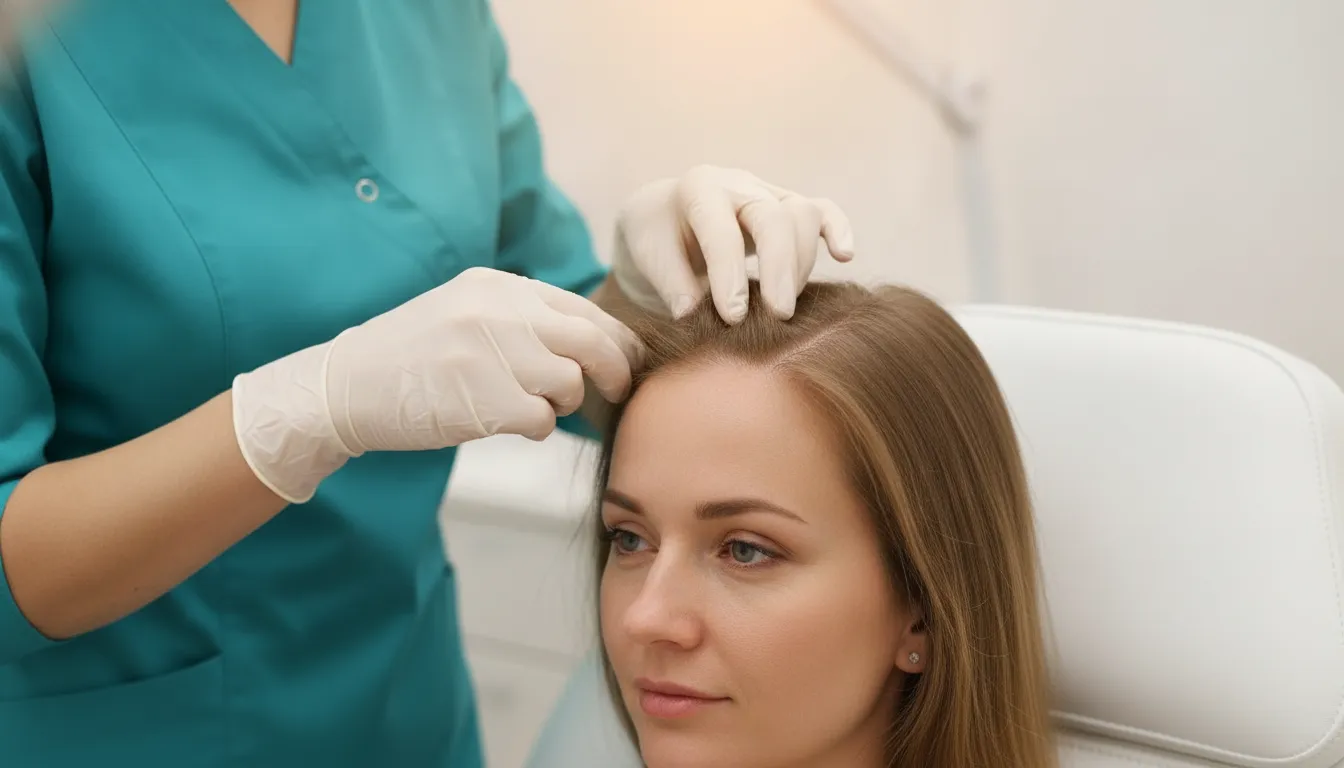
The process generally begins with a blood draw. The sample is placed in a centrifuge, a device that spins the blood to separate its components. A portion containing a higher concentration of platelets is then prepared for injection into the target area. The exact equipment, preparation method, injection pattern, and treatment plan can vary by provider and by the patient’s situation. This general description should not be treated as a specific protocol for every practice.
How the scalp injection concept works
PRP is intended to place the patient’s own concentrated blood components where hair follicles may need support. The proposed effects may involve signaling related to healing and the local follicle environment, but the mechanism is not completely understood. That is one reason a careful evaluation matters before deciding whether this approach is appropriate.
Hair loss is not one condition with one cause. Pattern hair loss, hormonal changes, nutritional issues, medication effects, inflammation, stress-related shedding, and other medical factors may require different evaluations or treatments. A professional assessment can help clarify the pattern of loss, review relevant history, and identify whether additional medical evaluation is appropriate. PRP should not be presented as a guaranteed solution, and it is not automatically suitable for everyone.
One small randomized study of men with pattern hair loss illustrates why evidence should be interpreted carefully. Participants received PRP on one half of the scalp and placebo on the other, using the study’s own treatment method. The researchers reported improvement after the treatment cycles, while also observing continued hair loss in some participants during follow-up. Those findings do not establish a universal schedule, outcome, or response for every patient.
PRP for hair loss is also distinct from facial PRP or microneedling with PRP. For background on that separate aesthetic application, see how PRP treatments work. A consultation should make clear which treatment is being discussed, what it is intended to address, and what alternatives may be worth considering.
Does PRP for Hair Loss Really Work?
The most accurate answer is that PRP may help some people with certain types of hair loss, but the evidence does not support a guarantee. Results depend on the cause of thinning, the condition of the follicles, the treatment approach, and the way an individual’s body responds.
One NIH-indexed randomized, placebo-controlled study offers useful evidence, while also showing why expectations should stay realistic. The study enrolled 23 men with diagnosed male pattern hair loss, with 20 completing the relevant treatment comparison. Each participant received PRP on one half of the scalp and placebo on the other, allowing researchers to compare changes within the same person. The researchers administered three treatments at 30-day intervals and followed participants for two years. Read the randomized study in full.
After the three treatment cycles, the study reported clinical improvement in hair counts and density compared with baseline. However, those findings describe this small study group. They do not predict the result for every person, and they do not establish one universal protocol for all patients.
| Evidence-supported conclusion | What remains unknown | Realistic expectation |
|---|---|---|
| A randomized study found improvement after three PRP treatment cycles compared with baseline. | Whether the same response will occur with a different cause of hair loss, treatment method, or patient profile. | PRP may support improvement for an appropriate candidate, but response varies. |
| The study used a half-scalp placebo comparison and objective hair assessments. | The study was small, included men with male pattern hair loss, and cannot answer every hair-loss question. | A professional evaluation matters before deciding whether PRP fits your situation. |
| Participants were followed for two years, providing information beyond the initial treatment period. | Four of the 20 patients reported progressive hair loss after 12 months, and some required retreatment. | Maintenance or additional care may be discussed. Initial improvement is not the same as permanent correction. |
Hair loss has many possible causes, and PRP cannot address every one. A consultation should review your history, medications, allergies, previous procedures, goals, and likely diagnosis. It should also cover limitations, alternatives, timing, and what improvement would realistically look like. That discussion helps separate an evidence-informed option from a promise that no responsible provider can make.
Who May Be a Candidate for PRP Hair Treatment?
PRP may be worth discussing for someone noticing gradual thinning, reduced density, or changes in hair growth, but candidacy cannot be determined by appearance alone. Hair loss can have multiple causes, and the most appropriate next step depends on the pattern, timing, and health factors behind the change. An individualized assessment is more useful than assuming the same treatment will fit everyone.
People with earlier or less extensive thinning may ask about PRP because preserving existing hair and understanding available options can feel more manageable than waiting for the problem to progress. That does not mean PRP for hair loss is appropriate in every early case, or that it can restore hair when another medical issue is involved. A qualified professional should first consider whether the concern appears consistent with a situation that may respond to this type of treatment and whether another evaluation is needed.
The cause and pattern of thinning matter
During a consultation, be prepared to describe when you first noticed the change. Whether it developed gradually or quickly, and whether shedding is diffuse or concentrated in certain areas. Recent illness, stress, hormonal changes, nutritional concerns, scalp symptoms, family history, and previous hair treatments may all be relevant context. These details do not provide a diagnosis by themselves, but they help guide a more responsible discussion about options and expectations.
Your health history can affect the conversation
A candidacy review should include your medical history, current medications, allergies, prior procedures, and any relevant contraindications. Share complete information, including supplements and treatments that affect bleeding or healing. A professional may also ask about your goals, schedule, comfort level, budget, and previous treatment response. This information helps determine whether the approach fits your circumstances and whether alternatives deserve consideration.
Realistic expectations are just as important as physical eligibility. PRP is not a guaranteed solution, and response can vary from one person to another. The evidence does not establish one universal protocol or outcome for every patient. A consultation should explain the potential limitations, possible timelines, session planning, and alternatives without promising regrowth. If you are in the Dallas-Fort Worth area and want to understand your options, ask for an assessment focused on your individual history rather than a one-size-fits-all recommendation.
What Happens During Treatment and Recovery?
A PRP appointment for hair concerns is usually planned around your history, goals, and the provider’s assessment. The sequence below describes a general approach, not a guaranteed or universal protocol. Exact preparation, processing methods, injection technique, aftercare, and follow-up recommendations vary by practice and patient. A qualified provider should determine whether the treatment is appropriate for you, explain its limitations, and address questions before proceeding.
- Consultation and assessment. The visit begins with a discussion of your hair concerns, health history, medications, allergies, prior procedures, goals, and expectations. Because thinning and hair loss can have multiple causes, the provider may review whether further evaluation or an alternative approach is appropriate. Candidacy is individualized and may also reflect contraindications, lifestyle, comfort preferences, budget, and time constraints. Informed consent should cover the purpose of treatment, expected outcomes and limitations, possible risks, alternatives, aftercare, and financial obligations.
- Blood draw. If you and the qualified provider decide to proceed, a small blood sample is collected. PRP is prepared from a patient’s own blood components. The amount drawn and the details of collection depend on the provider’s protocol and the treatment area. You should receive an opportunity to discuss comfort measures and any relevant medical concerns before the draw.
- Processing the sample. The sample is processed to separate and concentrate platelets within the plasma. A centrifuge is commonly used for this separation. The resulting preparation is intended for injection into the selected area, but processing systems and preparation details can differ. The mechanism behind PRP injections is not completely understood, so the procedure should be discussed in evidence-aware terms rather than presented as a guaranteed solution. One randomized study describes PRP prepared from blood before scalp injection, but its protocol should not be treated as a standard for every patient.
- Scalp injections. The prepared PRP is injected into the planned scalp area using the provider’s chosen technique. Injection locations, depth, volume, and comfort measures are clinical decisions. Ask how the target area will be identified and what sensations to expect. Do not assume that a schedule or session count used in a study applies to your care.
- Aftercare discussion and follow-up. Before leaving, the provider should explain what to do and avoid after treatment, how to monitor the treated area, and when to contact the office with concerns. Follow-up timing and any future treatment plan should be individualized. Recovery experiences vary, so ask when you can resume usual activities and how progress will be assessed. A clear aftercare conversation helps you make informed decisions without relying on promises about recovery or hair growth.
The most useful appointment is one that leaves you understanding both the potential rationale and the boundaries of PRP for hair loss. Bring a current medication list and be candid about prior treatments. That information helps the provider recommend a plan that fits your health history and goals.
What Are the Risks and Side Effects of PRP?
PRP for hair loss involves a blood draw and injections into the scalp, so temporary discomfort at the injection sites can occur. Reported effects may include soreness, tenderness, swelling, itching, minor bleeding, bruising, or a headache. These symptoms are generally discussed as short-term injection-related effects, but experiences vary. A small randomized study of PRP for male pattern hair loss reported no side effects during treatment. Although that finding should not be interpreted as proof that complications are impossible for every patient. Read the published study details and discuss how its limitations apply to your situation.
Why your medical history matters
PRP may not be appropriate for every person or every cause of hair thinning. During an assessment, the provider should review your medical history, current medications, allergies, previous procedures, and treatment goals. This conversation helps identify factors that could affect bleeding, healing, infection risk, or the likely explanation for hair loss. It also creates an opportunity to discuss alternatives if PRP is not the best fit.
Be thorough and specific when sharing health information. Mention medications and supplements, including anything that may affect bleeding or inflammation. Tell the provider about allergies, scalp conditions, recent procedures, and any history that could change how an injection-based treatment should be planned. Do not stop a prescribed medication on your own. Ask the prescribing clinician or treatment provider how it should be handled.
When should you contact your provider?
Ask your provider what discomfort and healing changes are expected after treatment, and what time frame they consider normal. Contact the provider if pain is severe, worsening, or not improving as expected. Or if you develop increasing redness, warmth, drainage, significant swelling, fever, persistent bleeding, or other symptoms that concern you. Seek urgent medical attention for severe symptoms, such as trouble breathing, facial swelling, fainting, or signs of a serious allergic reaction.
Before scheduling, request clear aftercare instructions and a direct way to ask follow-up questions. A careful consultation should cover possible risks, limitations, alternatives, and realistic expectations rather than treating PRP as a guaranteed solution. That approach is especially important because hair loss can have multiple causes, and treating the wrong cause may delay more appropriate evaluation.
How Should You Compare PRP With Other Hair-Loss Options?
There is no single best approach for every person experiencing thinning or shedding. Hair loss can have different contributing factors, and an option that makes sense for one person may be unsuitable for another. Comparing treatments is more useful when you look beyond marketing claims and ask how each approach fits your goals. Health history, schedule, comfort level, and willingness to continue treatment over time.
PRP uses components of your own blood that are processed before being injected into the scalp. A small randomized, placebo-controlled study reported improvement after three treatment cycles, but it involved a limited group of men with pattern hair loss. The researchers also noted that more extensive controlled studies are needed. That makes PRP an option to discuss, not a guaranteed substitute for evaluation or other care. Read the study details for its design and limitations.
| Option category | What may appeal to patients | Questions and limitations |
|---|---|---|
| PRP injections | Uses a preparation from the patient’s own blood and is delivered through scalp injections. | Ask whether the available evidence fits your situation, what assessment is required, how discomfort is managed, and whether follow-up or maintenance may be needed. Outcomes are not universal. |
| Topical or oral treatments | May fit people who prefer a medication-based approach that can be incorporated into an ongoing routine. | Discuss possible contraindications, medication interactions, side effects, adherence, and how long you may need to use the treatment. A qualified clinician should determine whether a medication is appropriate. |
| Light-based or device-based options | May appeal to patients who prefer a non-injection treatment format. | Clarify the evidence, device status, treatment schedule, expected maintenance, total time commitment, and whether the technology addresses your specific concern. |
| Specialist evaluation or treatment of an underlying concern | May be the most appropriate first step when the pattern, timing, or accompanying symptoms call for a closer medical review. | Do not assume a cosmetic treatment is the right starting point. Ask what information, examination, or testing may be needed and when referral is recommended. |
Use your priorities to narrow the conversation
Before choosing PRP for hair loss, write down what matters most. You may prioritize avoiding daily medication, minimizing injections, limiting appointments, protecting a specific budget, or pursuing the most evidence-supported option for your circumstances. Be candid about previous treatment response, allergies, medications, medical history, and comfort preferences. These details can change the safety discussion and the realistic plan.
A thorough consultation should also cover expected outcomes, limitations, possible risks, aftercare, alternatives, and financial obligations. At Ultimate Image MedSpa, treatment planning is described as individualized, with attention to contraindications, lifestyle, time constraints, budget, and goals. The purpose is not to steer every patient toward PRP. It is to help determine whether PRP, another option, or further evaluation best matches the person in front of the provider.
Questions to Ask Before Choosing PRP in Texas
A thoughtful consultation should help you understand whether platelet-rich plasma is appropriate for your situation, not pressure you into a predetermined plan. Bring a list of questions and be ready to describe when the thinning began, how it has changed, and what outcome you hope to achieve.
- What may be causing my hair thinning or loss? Hair changes can have more than one possible cause. Ask what information is needed to evaluate your situation and whether another medical assessment is appropriate.
- Am I a reasonable candidate for this approach? Ask how your pattern of hair loss, overall health, treatment goals, and previous efforts affect candidacy. A plan should be based on your circumstances rather than a universal promise.
- How do my medical history, medications, and allergies affect treatment? Share current medications, supplements, allergies, past procedures, and relevant health conditions. Ask about contraindications and whether anything needs to be reviewed before treatment.
- What exactly is included in the protocol? Ask how blood is collected and processed, where treatment is performed, what the provider will explain before injection, and how the approach is tailored to you. Do not assume that a protocol used for one PRP application is the same as a hair-focused plan.
- What alternatives should I consider? Request an explanation of appropriate options, including the factors that make one approach more suitable than another. A credible discussion should include limitations, not only potential benefits.
- What timeline is realistic for evaluation and follow-up? Ask when progress would be assessed, how response will be documented, and what happens if your results do not match expectations. Be cautious of guaranteed regrowth or fixed promises that are not supported by your evaluation.
- What aftercare and activity limitations should I plan for? Get written instructions for the day of treatment, the following days, warning signs, and who to contact with concerns.
- What is the total treatment plan? Clarify the expected number of visits only after your assessment, follow-up schedule, time commitment, financial obligations, and any additional care that may be recommended.
In Texas, local convenience matters, but it should not replace careful screening and informed consent. A consultation should leave you with clear next steps, realistic expectations, and enough information to make a comfortable decision. If you want to discuss your goals and available aesthetic services, you can contact Ultimate Image MedSpa.
Frequently Asked Questions
Does PRP actually work for hair loss?
PRP may help some people with certain types of hair thinning, but results vary and it is not a guaranteed solution. A small randomized study of men with pattern hair loss reported improvement after three treatments, while also noting continued hair loss in some participants during follow-up. The researchers said larger controlled studies are still needed. Read the study details.
What are the potential side effects of PRP injections for hair loss?
Possible effects can include temporary tenderness, swelling, itching, minor bleeding, or discomfort around injection sites. Your provider should review your medical history, medications, allergies, and potential contraindications before treatment. Informed consent should also cover risks, aftercare, limitations, and alternatives.
Is it normal to experience pain one week after a PRP injection?
Some soreness can occur after scalp injections, but persistent, worsening, or severe pain one week later deserves professional attention. Contact the treating provider for individualized guidance, especially if pain occurs with increasing redness, warmth, drainage, fever, or other concerning changes. Do not assume ongoing pain is a normal part of recovery.
What shampoo does a dermatologist recommend for female hair loss?
There is no single shampoo that is appropriate for every person with female hair loss. Hair thinning can have multiple causes, and shampoo alone may not address the underlying issue. A professional evaluation can help clarify your concerns and guide a plan based on your history, goals, medications, and prior treatment response.
Ready to Discuss Your Hair-Thinning Concerns?
Understanding the possible cause of hair thinning is an important first step before deciding whether PRP is appropriate. An individualized assessment can help you review your goals, medical history, medications, and realistic treatment options. Book a consultation with Ultimate Image MedSpa to discuss your concerns and determine whether a professional treatment assessment is the right next step.