

Scar treatment options work best when they match the type of scar, how long it has been present, and what you want to improve. Acne scars, dark marks, surgical scars, and raised scars do not respond to the same approach. A consultation can help separate texture from discoloration and identify whether a non-surgical treatment or medical referral makes the most sense.
Book your consultation to discuss scar treatment options.
What are the main types of scars?
Scars are the skin’s response to injury, inflammation, or surgery. They may be flat, darker or lighter than the surrounding skin, depressed below the surface, or raised above it. Identifying the pattern matters because a treatment that supports collagen remodeling for a depressed acne scar may not be appropriate for a thick, itchy, or expanding keloid.
Common categories include:
- Atrophic acne scars: indented scars such as ice pick, boxcar, or rolling scars.
- Post-inflammatory discoloration: red, brown, or gray marks left after acne or another skin injury. These marks are not the same as a depressed scar.
- Textural scars: uneven areas that may feel rough or look less smooth even when they are not deeply indented.
- Surgical or traumatic scars: marks that form after an incision, cut, burn, or other injury. Their appearance can change as they mature.
- Hypertrophic scars: raised scars that remain within the original wound boundary.
- Keloids: raised scar tissue that can grow beyond the original wound boundary and may itch, hurt, or continue changing.
The American Academy of Dermatology’s scar guidance recommends professional evaluation when you are unsure what a scar is, when a scar changes, or when you need help choosing a treatment. A scar that is painful, increasingly itchy, restricting movement, or growing beyond the original injury deserves medical attention rather than a cosmetic treatment chosen from a list.
Which scar treatment options may help acne scars?
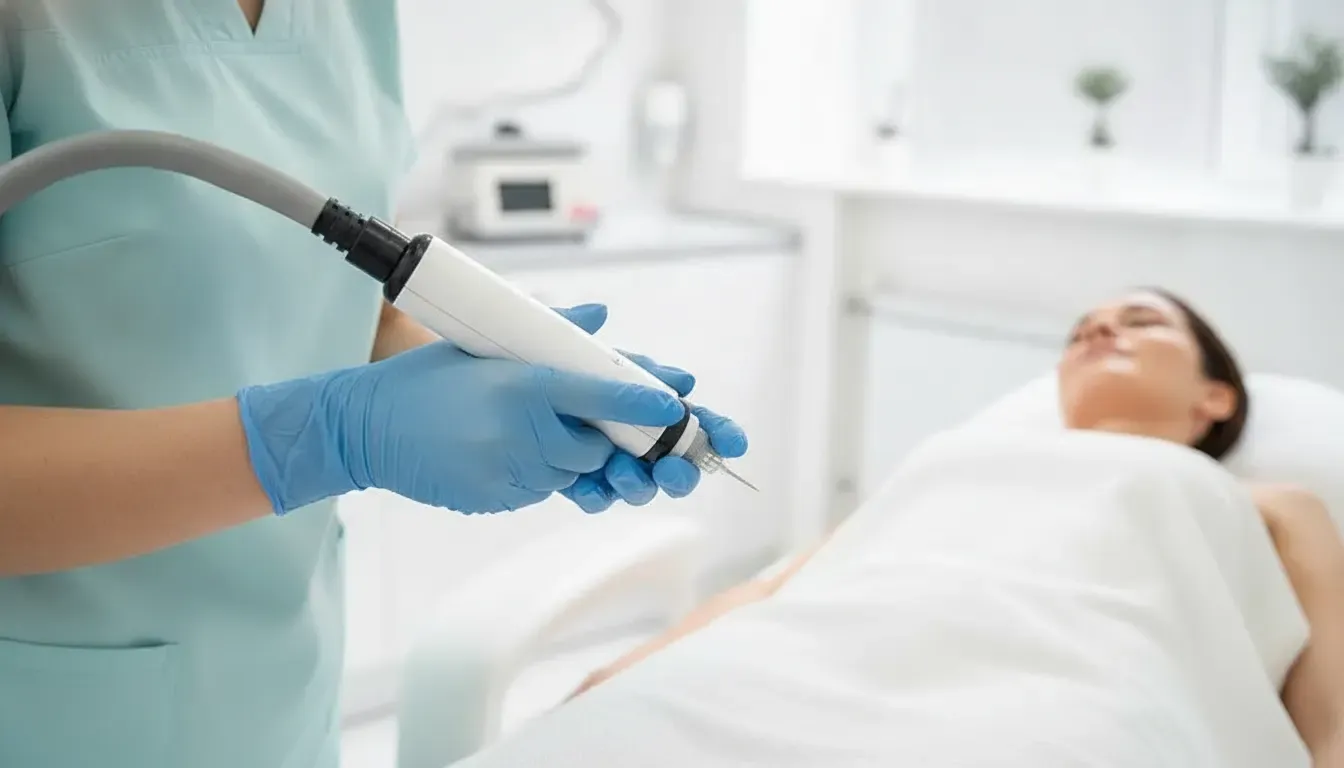
SkinPen microneedling for acne scars
SkinPen microneedling creates controlled micro-injuries that support the skin’s natural remodeling process. Ultimate Image MedSpa’s SkinPen service is designed for concerns that include facial acne scars, fine lines, and uneven texture. It is a minimally invasive option, but it is not a one-size-fits-all answer. Active acne, infection, a history of abnormal scarring, medications, and skin sensitivity should be reviewed before treatment.
Microneedling is often considered when the primary concern is depressed texture rather than only a dark mark. A treatment plan may use more than one session, with progress assessed over time as collagen remodeling develops. Your provider can explain whether SkinPen alone, a staged plan, or another option better matches your scar pattern.
eMatrix for textural scars
eMatrix Sublative Rejuvenation uses fractionated bipolar radiofrequency to deliver energy into the dermis while leaving much of the surface intact. Ultimate Image MedSpa describes eMatrix as an option for acne scars, uneven texture, tone, and overall skin quality. It may be considered when texture is the main concern and a patient wants a non-laser approach, but candidacy and settings must be individualized.
VI Peel for acne-related marks and scarring
Professional chemical peels are more focused on the surface layers of the skin. The VI Peel collection includes formulations for different goals. VI Peel Purify with Precision Plus is described for acne, hyperpigmentation, and scarring. A peel may be a better conversation when discoloration, congestion, and rough surface texture are prominent, but it cannot fill a deep indentation in the same way a collagen-remodeling treatment may.
Peels also require aftercare and sun protection. Tell your provider about recent sun exposure, retinoids, isotretinoin history, active irritation, pregnancy or nursing, and any tendency toward abnormal scarring before a peel is selected.
How are surgical scars treated?
Surgical scars need time to close and mature before many cosmetic procedures are considered. Once an incision is fully healed, a provider may assess its color, thickness, tightness, position, and texture. Some mature, flat scars may be candidates for a carefully selected resurfacing or collagen-remodeling approach, while a thick, painful, spreading, or movement-limiting scar may need evaluation by a dermatologist or plastic surgeon.

Possible medical approaches for surgical scars can include silicone products during healing, injections for selected raised scars, laser or light-based care, resurfacing, or surgical scar revision. The American Society of Plastic Surgeons’ scar guidance also emphasizes healing, scar type, and individualized treatment. These options are not interchangeable, and some are performed by specialists outside a medical spa. Do not apply a peel or schedule microneedling over a healing incision without clearance from the clinician managing your surgery.
If a scar is new, follow the operating clinician’s wound-care instructions first. Protecting healed skin from the sun can help reduce persistent color contrast. If the scar becomes increasingly red, warm, painful, swollen, or begins separating, contact the surgical team rather than seeking cosmetic treatment.
What treatments are used for keloid and hypertrophic scars?
Keloid and hypertrophic scars are raised scars, so they should be assessed differently from depressed acne scars. Hypertrophic scars generally stay within the original wound, while keloids can extend beyond it and may recur. Treatment may involve silicone, pressure, injections, laser or light therapy, cryotherapy, surgery, or a combination chosen by a medical specialist.
How do you choose among scar treatment options?
The most effective scar treatment option is the one that fits the scar, the surrounding skin, and the patient’s safety profile. There is no universal treatment for every scar. During a consultation, the provider should look at whether the concern is indentation, discoloration, redness, thickness, or tightness and then explain expected improvement, limitations, recovery, and alternatives.
| Primary concern | Options that may be discussed | Important planning question |
|---|---|---|
| Depressed acne scar texture | SkinPen, eMatrix, or a staged combination | Is the acne controlled, and how deep is the scar? |
| Acne-related discoloration | Selected VI Peel formulas, home care, and sun protection | Is the mark pigment, redness, or a true indentation? |
| Uneven surface texture | eMatrix, SkinPen, or another resurfacing approach | What recovery time and skin response are realistic? |
| Fully healed surgical scar | Medical review, silicone care, resurfacing, or referral | Is the incision fully healed and is the scar changing? |
| Raised, painful, or expanding scar | Dermatology or plastic-surgery evaluation | Could this be hypertrophic or keloid tissue? |
Ask these questions before starting:
- What type of scar or mark am I treating?
- Is my skin fully healed and free of active infection or uncontrolled acne?
- Which treatment targets the actual concern: color, depth, texture, or thickness?
- What side effects and downtime should I plan for?
- How will we protect my skin tone and reduce the risk of post-inflammatory color change?
- Will I need a series, maintenance care, or a referral?
Skin tone, previous reactions, medication use, sun exposure, pregnancy or nursing, and a history of keloids can all affect the plan. A personalized assessment is particularly important for anyone with darker skin or a history of post-inflammatory hyperpigmentation. A careful provider should explain how the treatment will be adjusted for your skin rather than promising a fixed result.
Book your consultation to compare scar treatment options for your skin and goals.
Can old scars be improved?
Older scars can sometimes be improved, but age alone does not determine the outcome. Scar tissue may continue to soften and change over time, and the available options depend on whether the scar is depressed, discolored, raised, tight, or simply more visible because of contrast with the surrounding skin. Treatment can make a scar less noticeable, but no procedure can promise to erase every scar.
Bring a list of current products and medications to your consultation. If the scar followed surgery, bring information about when the incision healed and whether the surgeon gave you restrictions. Photos from earlier stages may also help a provider understand how the scar has changed.
Frequently Asked Questions About Scar Treatment Options
What is the most effective treatment for scars?
The most effective treatment depends on the scar’s type and the result you want. Depressed acne scars may be evaluated for collagen-remodeling treatments such as SkinPen or eMatrix, while discoloration may call for a different plan. Raised or changing scars need medical assessment before cosmetic treatment is selected.
What are the newest scar treatments available?
What do plastic surgeons recommend for surgical scars?
Recommendations vary according to healing status, scar maturity, symptoms, and location. A surgical team may begin with wound care and silicone products, then consider injections, laser or light care, resurfacing, or scar revision. Follow the surgeon’s instructions for a healing incision and seek clearance before booking a cosmetic procedure.
Can a 20-year-old scar be removed?
An old scar may be softened, flattened, or made less noticeable, but complete removal cannot be guaranteed. A provider will evaluate its type, depth, color, and symptoms before discussing options. Long-standing raised scars, especially keloids, may need a dermatologist or plastic surgeon rather than a cosmetic resurfacing treatment.
Book your consultation to create a personalized scar care plan.
Important: Ultimate Image MedSpa does not offer the treatment previously discussed on this page. This page is not a UIMS service page.
Current Ultimate Image MedSpa services
For current offerings, review the Ultimate Image MedSpa Services page. Current listed services include VI Peel, HydraFacial, SkinPen Microneedling, eMatrix, Laser Hair Removal, Tattoo Removal, Laser Vein Treatment, Skin Tightening, Emsculpt Neo, Cellulite Reduction, and Fat Reduction. Availability and treatment details should be confirmed on that page.
Contact Ultimate Image MedSpa with general questions about currently listed services.