
Melasma treatment is rarely about finding one miracle product or choosing the most aggressive procedure. Melasma is a recurring form of facial hyperpigmentation that can appear as brown or gray-brown patches on the cheeks, forehead, nose, or upper lip. Sun exposure, visible light, heat, hormonal changes, genetics, and irritation may all influence its behavior. A plan that works well for one person may be too irritating or intensive for another.
Book your consultation to discuss personalized melasma treatment options
The most reliable approach starts by confirming that the discoloration is actually melasma. From there, care may combine consistent photoprotection, clinician-directed topical products, and carefully selected professional treatments. At Ultimate Image MedSpa, options may include VI Peel Precision Plus, SkinPen Microneedling, and IPL photofacial treatment. Each has a different purpose and risk profile. Explore the practice’s skin rejuvenation services to see how this guide fits within the broader treatment menu.
Quick answer: Effective melasma treatment usually combines daily broad-spectrum and visible-light protection, clinician-directed topical care, and a conservative professional plan when appropriate. VI Peel Precision Plus and SkinPen Microneedling may support selected patients, while IPL requires careful evaluation because heat and light can aggravate pigment in some people. Results are gradual, and maintenance remains important.
What Is Melasma and Why Does It Return?
Quick answer: At Ultimate Image MedSpa, melasma is approached as recurring facial hyperpigmentation influenced by light, heat, hormones, genetics, and irritation. Confirming the diagnosis helps determine which treatment and maintenance plan is appropriate, especially when another type of discoloration could look similar.
Melasma is an acquired condition in which areas of skin produce or retain more pigment than surrounding skin. It often has a symmetrical pattern, meaning similar patches may develop on both sides of the face. Color can range from light brown to deeper brown or gray-brown. Skin tone and pigment depth influence how it appears.
Several influences can overlap. Ultraviolet radiation can stimulate pigment production, and visible light may also worsen melasma in people who are prone to hyperpigmentation. Hormonal influences are another recognized factor. Pregnancy and oral contraceptive use are commonly discussed triggers, although melasma can affect people who have experienced neither. Genetics, inflammation, and heat may also contribute.
Because several conditions can resemble melasma, avoid diagnosing every dark patch at home. A qualified clinician can review the pattern, timing, medical history, current products, and previous procedures. A Wood lamp examination may be useful in some evaluations. A rapidly changing, isolated, irregular, bleeding, or persistently irritated spot should receive appropriate medical attention rather than routine cosmetic treatment.
Once melasma is confirmed, the objective is usually management rather than a permanent cure. A thoughtful plan should explain what improvement may be realistic, how long progress may take, what recovery involves, and how maintenance will fit into daily life.
Why Sun and Visible-Light Protection Come First
Quick answer: Ultimate Image MedSpa considers daily broad-spectrum sunscreen and visible-light protection the foundation of melasma care. Consistent protection helps reduce triggers that can undermine home routines and professional procedures. A treatment plan is more sustainable when photoprotection is practical enough to follow every day.
Photoprotection is the foundation of nearly every responsible melasma treatment plan. An in-office service cannot offset daily exposure that continues to stimulate pigment. Use the sunscreen recommended for your skin every morning, apply enough to cover exposed areas, and reapply according to the product instructions and your time outdoors.
Visible light deserves consideration as well. A tinted sunscreen containing iron oxides may provide additional protection against visible-light wavelengths that can contribute to hyperpigmentation. Choose a formula you will use consistently. Comfort, compatibility with makeup, and ease of reapplication often matter more than selecting a product that stays unused in a drawer.
Heat is an individual trigger, but it is worth observing. Saunas, hot yoga, intense workouts, and very warm outdoor conditions may make some people’s melasma appear more noticeable. You do not have to stop normal activities automatically. Instead, notice patterns, cool your skin when practical, avoid unnecessary irritation, and discuss recurring flares with your provider.
The American Academy of Dermatology’s melasma treatment guidance offers useful background on sun protection and treatment choices. It does not replace an evaluation of your skin, medical history, current products, or treatment goals.
Which Topicals May Support Melasma Treatment?
Quick answer: At Ultimate Image MedSpa, clinician-directed topical care may support pigment management for selected patients. Hydroquinone, retinoids, azelaic acid, and tranexamic acid are discussed in melasma care, but the safest choice depends on diagnosis, sensitivity, current products, medications, and pregnancy or breastfeeding status.
Topical care can help reduce the appearance of uneven pigment and support maintenance between professional visits. The right ingredients depend on your diagnosis, skin tone, sensitivity, medical history, medications, and pregnancy or breastfeeding status. A provider can help you choose a routine that supports progress without creating avoidable inflammation.
How should you introduce a topical routine?
Start with a gentle cleanser, moisturizer, and reliable sunscreen. Add one active product at a time when your provider recommends it. Introducing several strong ingredients together can make it difficult to identify irritation and may compromise the skin barrier. Follow the recommended frequency rather than assuming more applications will produce faster results.
Hydroquinone may be prescribed for selected patients for a defined period. Retinoids may support cell turnover in some plans. Azelaic acid may be considered for pigment and inflammatory concerns, while tranexamic acid may be discussed in certain cases. These ingredients are not interchangeable, and online advice cannot account for every medical history or interaction.
Avoid picking, abrasive scrubs, harsh brushes, and frequent unsupervised peels. Tell your provider about every prescription and over-the-counter product you use, including products purchased online. If burning, swelling, persistent redness, or worsening discoloration develops, pause and request guidance instead of adding more products.
How Can VI Peel Precision Plus Fit Into a Melasma Plan?
Quick answer: VI Peel Precision Plus may be considered at Ultimate Image MedSpa for selected pigmentation concerns after a professional review. The peel can support visible improvement, but peeling, aftercare, and possible recurrence make candidacy and maintenance important. It should be one part of a plan, not a guaranteed cure.
VI Peel Precision Plus is a professional chemical peel formulated for concerns that include UV-induced pigmentation, sun damage, melasma, and post-inflammatory hyperpigmentation. Ultimate Image MedSpa’s VI Peel treatment information identifies Precision Plus as the pigmentation-focused option in its VI Peel collection.
A peel may support visible improvement for an appropriate candidate, but more intensity is not automatically better. A provider should consider the appearance and depth of the pigment, recent sun exposure, skin sensitivity, active irritation, previous treatments, and your ability to follow aftercare. The goal is to reduce unnecessary inflammation while supporting an even-looking result.
What is recovery like after a VI Peel?
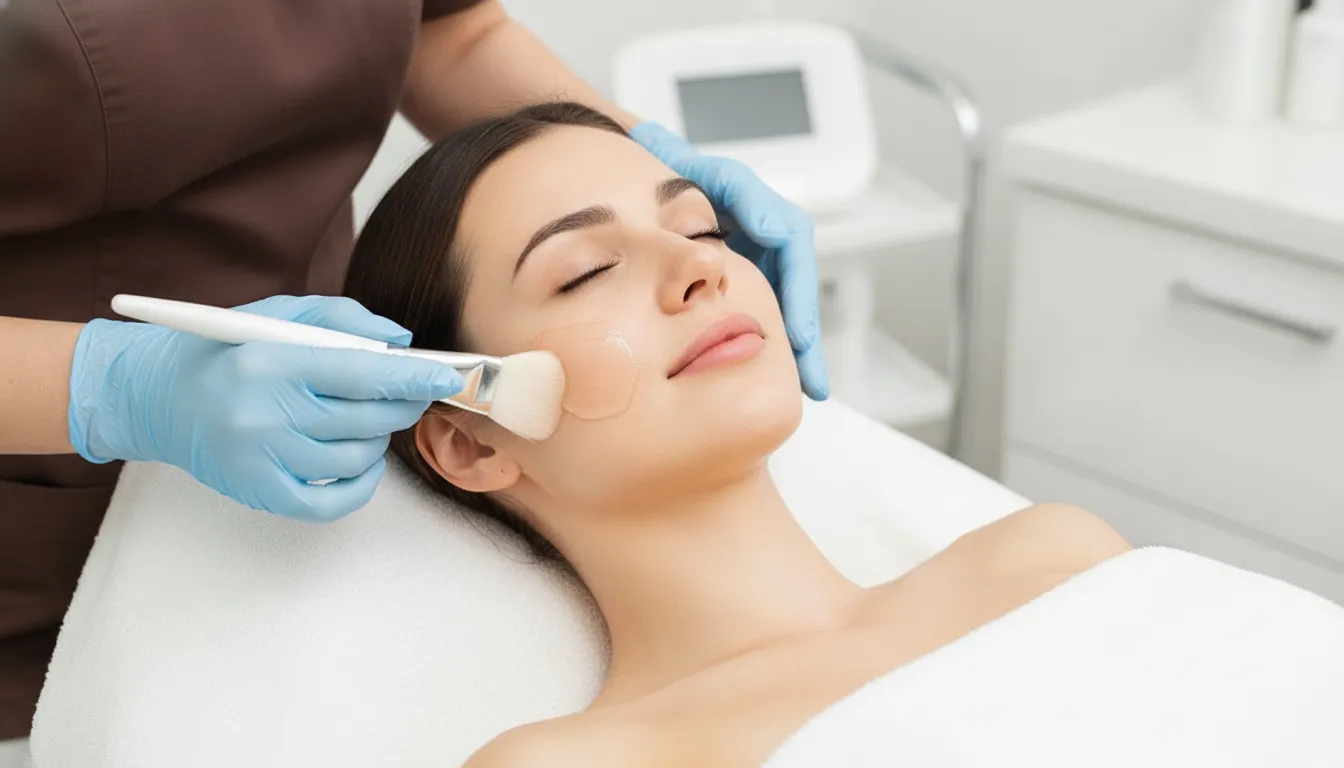
VI Peel Precision Plus is not necessarily a zero-downtime service. Treatment information for the VI Peel collection describes a take-home kit and a peeling process that requires careful home care. Follow the instructions provided for your specific treatment, protect the skin from ultraviolet and visible light. And do not resume irritating products until your provider says it is appropriate.
A peer-reviewed review of chemical peels and melasma approaches can provide broader clinical context, but research about a treatment category does not guarantee a particular result for one patient. A consultation is the right place to discuss whether VI Peel Precision Plus fits your skin and how it should be sequenced with other care.
Book your consultation to create a melasma treatment plan for your skin
Is SkinPen Microneedling an Option for Melasma?
Quick answer: SkinPen Microneedling may be one component of a tailored melasma treatment plan at Ultimate Image MedSpa, often alongside topical care. It is not automatically suitable for every patient because procedure-related inflammation can worsen pigment in susceptible skin. Screening, conservative technique, and aftercare are essential.
SkinPen Microneedling uses fine needles to create controlled micro-injuries that can stimulate the skin’s wound-healing response. Ultimate Image MedSpa uses SkinPen Precision, an FDA-cleared microneedling device, for selected skin concerns. Read the practice’s SkinPen Microneedling service information for general details about the procedure and recovery.
Microneedling may be considered when the goals include improving uneven texture, supporting product delivery, or addressing related concerns. It is not a universal first choice for active or unstable melasma. A provider should review your pigment pattern, history of post-inflammatory hyperpigmentation, current products, active acne or infection, and recent sun exposure.
Temporary redness can occur after treatment. Keep the routine gentle, follow the recommended aftercare, and protect the skin carefully while it recovers. Do not add strong exfoliants or retinoids simply because the skin feels ready. If you are comparing this procedure with other options, the guide on microneedling and hyperpigmentation provides more topic-specific context.
When Is IPL Photofacial Treatment Appropriate?
Quick answer: IPL photofacial treatment may help selected pigment concerns, but Ultimate Image MedSpa approaches melasma with careful screening. Light and heat can aggravate pigment for some patients, so a provider should weigh skin tone, diagnosis, triggers, recent sun exposure, and treatment history before recommending IPL.
IPL photofacial treatment uses pulses of broad-spectrum light and may be useful for selected pigment concerns. Melasma requires extra caution because heat and light can make discoloration more noticeable or trigger a flare in some people. That does not mean IPL is always inappropriate. It means candidacy should be individualized rather than decided from a photo or a generic treatment menu.
A provider may consider the type and depth of pigmentation, your Fitzpatrick skin type. How your skin responds to heat, current medications, recent tanning or sun exposure, and whether the diagnosis is certain. If the risk of worsening pigment outweighs the likely benefit, another approach may be more sensible.
For general information about the service, review Ultimate Image MedSpa’s photofacial treatment page. Ask about preparation, expected redness, sun precautions, and what happens if pigment temporarily darkens. A careful conversation before treatment is more valuable than selecting a procedure because it is popular.
| Option. | Potential role. | Important consideration. |
|---|---|---|
| Topical care. | Daily pigment management and maintenance. | Must match diagnosis, sensitivity, and medical history. |
| VI Peel Precision Plus. | Professional treatment for selected pigmentation concerns. | Peeling and aftercare are part of the plan. |
| SkinPen Microneedling. | May support selected texture and pigment goals. | Inflammation can worsen pigment in susceptible skin. |
| IPL photofacial. | May help selected pigment concerns. | Light and heat require careful melasma screening. |
.
How Do You Build a Melasma Treatment Plan That Lasts?
Quick answer: A lasting melasma plan at Ultimate Image MedSpa begins with diagnosis, trigger awareness, consistent photoprotection, a coordinated sequence, and follow-up. Improvement is usually gradual. Maintenance helps manage recurrence, and the best plan is one that protects the skin barrier and fits your routine.
Long-term improvement depends on what you do after the first visible change. A professional service may start the process, but maintenance protects the result. A realistic plan usually includes the following steps:
- Confirm the concern. Have a qualified professional review the pattern and rule out other causes of discoloration.
- Establish photoprotection. Use the recommended sunscreen consistently and consider visible-light protection if it fits your needs.
- Choose a measured intervention. Select topical care, VI Peel Precision Plus, SkinPen, IPL, or another option based on candidacy rather than trend.
- Protect the recovery period. Follow aftercare and avoid adding irritation while the skin is healing.
- Plan for maintenance. Track changes, manage triggers, and schedule follow-up when your provider recommends it.
Progress photos taken in similar lighting can help you notice gradual changes without judging your skin from day to day. Be cautious with claims that promise permanent removal, instant clearing, or identical results for every skin tone. Melasma can recur, but a thoughtful plan can make it more manageable.
Book your consultation to review VI Peel, SkinPen, IPL, and topical options.
Frequently Asked Questions About Melasma Treatment
Quick answer: Ultimate Image MedSpa’s melasma treatment guidance focuses on realistic improvement, daily light protection, careful product selection, and personalized screening. The answers below explain why recurrence is common, how procedures differ, and when a professional evaluation matters.
Can melasma be permanently removed?
Melasma can often be improved, but it commonly has a relapsing course. Even when patches become much less noticeable, skin may remain responsive to ultraviolet light, visible light, heat, hormonal changes, and irritation. A maintenance routine with consistent photoprotection and clinician-directed care can help reduce recurrence. Be cautious of any promise that guarantees permanent removal.
What is the best melasma treatment?
There is no single best option for every person. The right approach depends on the diagnosis, pigment depth, skin sensitivity, medical history, current products, triggers, and treatment goals. A plan may include sunscreen, topical care, VI Peel Precision Plus, SkinPen Microneedling, or IPL only when the provider believes the benefits outweigh the risks.
Can I get a chemical peel if I have melasma?
Some people with melasma may be candidates for a pigmentation-focused peel, while others need a different approach or more preparation first. Recent sun exposure, active irritation, medication use, skin sensitivity, and a history of post-inflammatory hyperpigmentation all matter. Discuss candidacy and aftercare before scheduling a peel.
How long does melasma treatment take to work?
Timing varies by the depth and triggers of the pigment, the chosen plan, consistency with photoprotection, and how the skin responds. Improvement is usually gradual rather than immediate. Your provider can explain what changes to watch for and when to reassess the plan. Follow-up helps identify whether maintenance or a different approach is needed.
Contact Ultimate Image MedSpa to discuss your melasma treatment options
.