

Recurring breakouts, lingering discoloration, and indented scars can look like one problem, but they often need different care. An acne treatment med spa can help you understand which professional options may fit your skin goal, current acne activity, sensitivity, medical history, and recovery preferences.
Ready to discuss your skin goals? Book your consultation at Ultimate Image MedSpa.
An acne treatment med spa may discuss customized chemical peels, HydraFacial, LED light therapy, photofacial treatment, or microneedling for selected concerns. Peels and light-based services may be considered for active acne or uneven tone. SkinPen microneedling is generally more relevant to certain acne scars after active inflammation is controlled. A consultation determines what is appropriate and when medical acne care should come first.
The most useful starting point is to separate what is happening now from what acne left behind. The sections below explain how that distinction affects treatment conversations at a medical spa.
What Can an Acne Treatment Med Spa Help Address?
Ultimate Image MedSpa can help match professional skin services to the concern being evaluated, such as active acne, post-acne discoloration, congestion, or selected acne scars. The right option depends on current skin health and a provider’s assessment.
A professional acne consultation begins by identifying whether the main concern is active acne, post-acne discoloration, or a change in skin texture. These concerns can overlap, but they are not interchangeable. Matching the service to the concern helps avoid using a texture-focused procedure on irritated skin or expecting a pore-cleansing facial to rebuild an indented scar.
Active acne
Active acne can include inflamed blemishes, clogged pores, oiliness, and recurring breakouts. A provider may consider services that cleanse congested skin, support a calmer appearance, or address factors that make a routine difficult to maintain. The decision depends on how active the acne is, whether the skin barrier is irritated, what products or medications you use, and whether a dermatologist or other medical clinician should evaluate the condition first.
Post-acne discoloration
Flat red, pink, brown, or gray marks may remain after a blemish heals. These marks can be mistaken for scars, even when the surface of the skin is relatively smooth. A chemical peel may be discussed for tone and texture concerns, but peel strength, timing, and aftercare matter, particularly for skin that is sensitive, recently sun-exposed, or prone to pigment changes.
Acne scars and texture
Atrophic acne scars are depressed areas caused by changes in collagen beneath the skin. They require a different conversation from discoloration. SkinPen microneedling creates controlled micro-injuries that can support collagen remodeling in appropriate candidates. It is not usually the first step for active, inflamed acne. Your provider should assess the scar pattern, current breakouts, skin health, healing history, and treatment expectations before recommending a plan.

How Does an Acne Treatment Med Spa Evaluation Work?
At Ultimate Image MedSpa, an acne treatment evaluation should connect your skin history, current routine, sensitivity, pigment response, recent procedures, and treatment goal. That information helps determine whether a service is appropriate, how it may be sequenced, and what recovery to expect.
An evaluation is more than choosing the most popular facial. It gives the provider information needed to determine whether a service is suitable, what sequence makes sense, and what results are realistic. A thorough visit considers your skin, health information, current routine, recent procedures, sun exposure, and the difference between an immediate cosmetic improvement and a longer-term treatment goal.
Your skin and acne history
Be prepared to discuss when your breakouts began, where they occur, whether they are painful or recurring, and which products or prescriptions you have tried. Tell the provider about allergies, sensitivities, cold sore history, recent waxing or resurfacing, and any medications that may affect healing or light sensitivity. Accurate information helps the team make a safer recommendation.
Your Fitzpatrick skin type and pigment response
Skin tone and pigment response are important when planning peels and light-based treatments. A provider may review how your skin reacts to sun exposure, whether you develop dark marks after inflammation, and how you have responded to earlier procedures. This does not guarantee a particular outcome, but it supports more careful treatment selection and aftercare guidance.
Your actual priority
Some patients want fewer active breakouts. Others are more concerned about marks that remain after acne clears, rough texture, enlarged-looking pores, or depressed scars. Say which concern affects you most. If scarring is your primary concern, review the acne scar treatment options page before your visit. A plan can then prioritize the right endpoint instead of combining multiple treatments simply because they are available.
- Active breakouts: discuss calming, cleansing, and acne-focused options.
- Discoloration: discuss tone-focused care and pigment-conscious aftercare.
- Indented scars: discuss collagen remodeling after active acne is controlled.
- Sensitivity or irritation: address barrier support and whether treatment should be delayed.
Which Med Spa Treatments May Be Discussed for Active Acne?
Ultimate Image MedSpa may discuss VI Peel Purify, HydraFacial with an acne-focused add-on, or blue LED light therapy for selected active-acne concerns. These options require screening, and severe, painful, rapidly worsening, or scarring acne may need medical evaluation first.
Active acne treatment at a med spa should focus on suitability and skin tolerance, not aggressive intensity. Depending on the assessment, the conversation may include VI Peel Purify, HydraFacial with an acne-focused add-on, or blue LED light therapy. These services are not interchangeable, and a med spa visit should not replace medical evaluation for severe, painful, rapidly worsening, or scarring acne.
VI Peel Purify
VI Peel Purify is positioned for active acne and oily skin. A chemical peel can help refresh the outer layer of skin, but the appropriate strength and timing depend on your condition and history. The provider should review irritation, sun exposure, current retinoids or exfoliants, and your ability to follow the post-treatment instructions. Peeling is a process, not an instant cure, so plan around the expected recovery.
HydraFacial with acne-focused options
HydraFacial uses a multi-step approach that cleanses, exfoliates, extracts, and hydrates. At Ultimate Image MedSpa, blue LED light is available as an add-on for moderate inflammatory acne and oily or congested skin concerns. A HydraFacial may offer a gentler, lower-downtime option for some patients, but it should still be customized when the skin is inflamed or easily irritated. Learn more about HydraFacial treatment before your visit.
Blue LED light therapy
Blue light is often discussed in the context of acne-focused skincare because it can be used as part of a broader plan for oily or congested skin. It is not a substitute for individualized diagnosis, prescription treatment, or consistent home care. Ask what the treatment is intended to address, how often it may be recommended, and what changes would indicate that the plan should be adjusted. You can also review LED light therapy details before your consultation.
For more detail on peel options and candidacy questions, review the VI Peel treatment information and bring your current skincare list to the consultation.
Can an Acne Treatment Med Spa Improve Discoloration and Uneven Tone?
Ultimate Image MedSpa may discuss chemical peels or selected photofacial treatment for the appearance of post-acne discoloration and uneven tone. A provider must consider your pigment history, skin tone, sun exposure, medications, and current irritation before recommending light-based or exfoliating care.
Some med spa services may improve the appearance of uneven tone after acne. But post-inflammatory discoloration can take time to fade and may return when the skin is repeatedly irritated or exposed to ultraviolet light. Treatment planning should account for pigment history, skin tone, sun habits, and the difference between treating a flat mark and treating a depressed scar.
Peels for tone and texture
A peel may be considered when the goal is to refresh the skin surface and improve the appearance of uneven tone or texture. VI Peel Purify with Precision Plus is described in the customer care information for acne with hyperpigmentation, acne scarring, hormonal acne, and adult acne. The actual recommendation should be based on an in-person assessment rather than a product name alone.
Photofacial conversations
A photofacial may be discussed for selected pigmentation or redness concerns, but light-based treatments require careful screening. Review the photofacial treatment information to understand the service before you ask about candidacy. The provider should ask about sun exposure, photosensitizing medications, recent tanning, and your tendency toward pigment changes. Do not assume that a service advertised for discoloration is appropriate while acne is actively irritated or while the skin barrier is compromised.
Aftercare is part of the treatment
Results depend partly on what happens after a procedure. Follow the provider’s instructions about cleansing, moisturizing, sun protection, and when to resume active products. Avoid adding scrubs, acids, or retinoids on your own while the skin is recovering. If you experience an unexpected reaction, contact the treating office for guidance instead of trying to correct it with more products.
When Is SkinPen Microneedling Considered for Acne Scars?
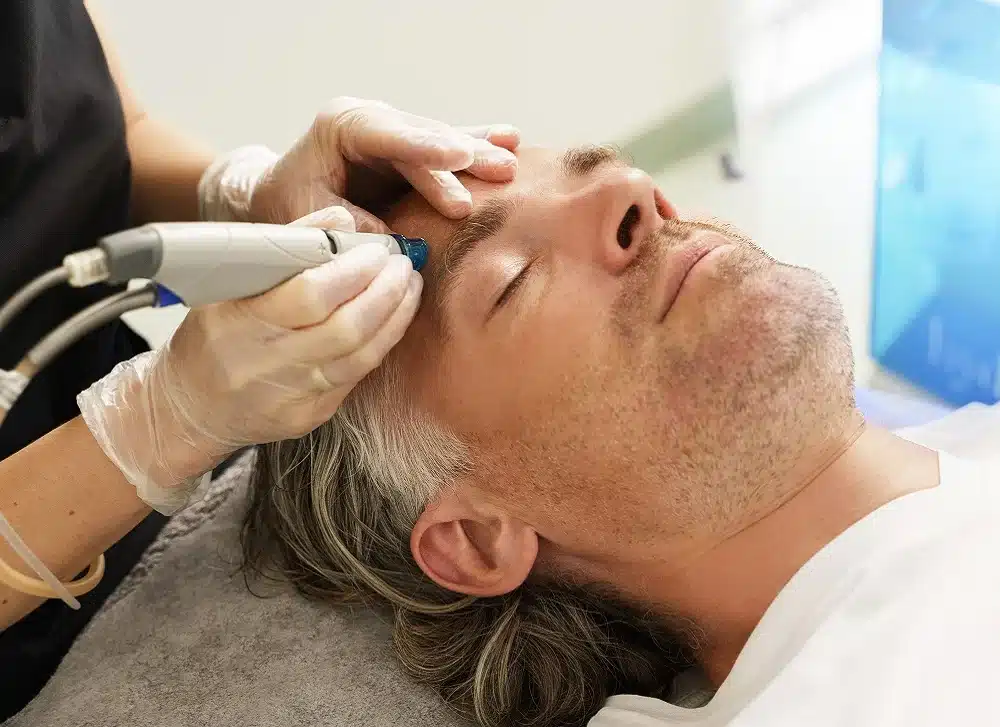
Ultimate Image MedSpa may consider SkinPen microneedling for selected acne scars and uneven texture after active inflammation is controlled. Candidacy depends on scar type, current skin health, healing factors, medications, and the provider’s assessment.
SkinPen microneedling is generally considered for selected acne scars and texture concerns, not as a universal treatment for current breakouts. The procedure uses controlled micro-injuries to support the skin’s collagen response. A provider must first determine whether the acne is controlled enough, whether the scars are appropriate for microneedling, and whether your healing history supports treatment.
What SkinPen may address
SkinPen is used at Ultimate Image MedSpa for collagen induction and the appearance of facial acne scars. It may be relevant when the main issue is a depressed or uneven texture rather than a flat color change. The goal is usually gradual improvement, and the number of sessions depends on the scar pattern, skin response, and treatment plan.
Why active acne can change the timing
Microneedling over active, inflamed lesions can be inappropriate and may increase irritation or complicate recovery. Current breakouts, open areas, sores, infection, and certain health or medication factors must be reviewed. If acne remains active, your provider may recommend addressing that concern first and revisiting scar-focused care later.
What recovery can involve
SkinPen treatment can cause temporary redness and sensitivity. Customer treatment information describes a typical recovery period of about 24 to 48 hours of redness, although individual responses vary. Follow the office’s specific instructions, protect the skin from the sun, and wait to restart irritating products until you are told it is appropriate. Read about SkinPen microneedling and acne scar treatment options before deciding what to ask about.
How Should You Compare Acne Treatment Med Spa Options?
Compare acne treatment med spa options by the concern being treated, current skin condition, expected recovery, provider guidance, and need for medical care. Ultimate Image MedSpa can use those factors to discuss whether a peel, HydraFacial, LED therapy, photofacial, or SkinPen plan fits your goals.
A useful comparison looks at the concern, intensity, recovery, and provider guidance rather than ranking treatments from best to worst. The same service can be reasonable for one patient and poorly timed for another. Use the table below as a discussion guide, not as a diagnosis or promise of results.
| Concern | Service that may be discussed | Important planning question |
|---|---|---|
| Active acne or oily congestion | VI Peel Purify, HydraFacial with blue LED, or other acne-focused care | Is the skin calm enough? Should medical acne care come first? |
| Flat post-acne discoloration | Selected chemical peel or photofacial conversation | How will pigment history, sun exposure, and photosensitizing factors affect the plan? |
| Rough or uneven texture | HydraFacial or a later collagen-focused plan | Is the texture concern surface congestion, discoloration, or a depressed scar? |
| Selected atrophic acne scars | SkinPen microneedling | Is active acne controlled, and what improvement is realistic over multiple sessions? |
| Sensitive or irritated skin | Conservative planning, delayed treatment, or referral when appropriate | What needs to improve before a procedure is safe and comfortable? |
Ask whether the proposed service is intended for active acne, marks, or scars. Ask how many visits may be considered, what downtime to plan for, which products to pause, and what symptoms require a call to the office. Clear answers are more useful than a generic package recommendation.
What Can You Do Before and After an Acne Treatment?
Before and after an acne treatment, follow the treating provider’s instructions, disclose products and medications, protect recovering skin from sunlight, and avoid adding irritating actives without guidance. Preparation and aftercare vary by service and medical history.
Preparation and aftercare help protect the skin barrier and make it easier to judge how your skin responds. The exact instructions depend on the service, your products, and your medical history. Follow the treating provider’s instructions over general advice, and disclose changes in medications, pregnancy status, sun exposure, or skin irritation before treatment.
Before your appointment
- Bring your product list. Include prescription and over-the-counter products, especially retinoids, exfoliating acids, acne medication, and products that increase sensitivity.
- Describe recent procedures. Mention waxing, injectables, laser treatments, peels, microneedling, or significant sun exposure.
- Discuss your timeline. Share upcoming travel, events, or activities that may make peeling, redness, or sun avoidance difficult.
- Ask about stopping products. Do not discontinue prescribed medication without asking the prescribing clinician, but do ask the treatment provider how your routine affects candidacy.
After your treatment
- Use gentle care. Cleanse and moisturize according to the office instructions instead of adding strong actives.
- Protect from sunlight. Sun protection is especially important after procedures that can increase sensitivity or involve pigment concerns.
- Do not pick or peel. Let the skin recover naturally and follow guidance if flaking or temporary redness occurs.
- Report unexpected symptoms. Contact the office if your reaction seems more severe or persistent than the instructions describe.
These steps do not guarantee a particular result, but they help reduce avoidable irritation and give your provider better information for future visits.
Is a Med Spa the Right Place for Your Acne Concern?
Ultimate Image MedSpa may be appropriate for professional aesthetic services when screening shows that your concern fits the treatment. Severe, painful, rapidly worsening, infected, or progressively scarring acne deserves prompt evaluation by an appropriate medical clinician.
A med spa may be a useful setting for professional skin treatments when your concern is appropriate for aesthetic care and the service is performed after a careful screening. It is not the right substitute for medical acne evaluation in every situation. Severe pain, extensive inflammation, rapidly worsening acne, suspected infection, or scarring that is progressing deserves prompt medical attention.
If your main goal is a professional treatment for active acne, discoloration, congestion, or selected scars, bring your questions to a consultation. Ultimate Image MedSpa offers services including VI Peel options, HydraFacial, LED light therapy, photofacial treatment, and SkinPen microneedling. The team can review your skin and explain which options may fit your goals, history, and recovery needs.
Frequently Asked Questions About Acne Treatment Med Spa Care
What is the best acne treatment at a med spa?
There is no single best option for every person. VI Peel Purify, HydraFacial with acne-focused options, LED light therapy, photofacial treatment, and SkinPen may address different concerns. A provider should first determine whether you have active acne, discoloration, surface congestion, or scars, then review sensitivity, medications, skin type, and realistic recovery.
Can a med spa treat active acne?
A med spa may offer acne-focused services for selected cases, such as VI Peel Purify, HydraFacial options, or blue LED light. These services do not replace medical diagnosis or prescription care when needed. Severe, painful, rapidly worsening, or scarring acne should be evaluated by an appropriate medical clinician.
Is microneedling good for acne scars?
SkinPen microneedling may be considered for selected atrophic acne scars because controlled micro-injuries can support collagen remodeling. It is not usually performed over active, inflamed acne, open areas, sores, or infection. Candidacy depends on scar type, current skin health, healing factors, and the provider’s assessment.
How many acne treatments will I need?
The number of visits depends on the treatment, concern, skin response, and goal. A single HydraFacial may provide a short-term refreshed appearance, while scar-focused microneedling is commonly planned as a series. Your provider should explain the proposed schedule, recovery, maintenance, and what progress can realistically be measured.
Can acne treatments remove dark marks?
Professional treatments may improve the appearance of post-acne discoloration, but dark marks can take time to fade and can worsen with irritation or sun exposure. A provider may discuss a peel or selected light-based treatment after reviewing pigment history, skin tone, medications, recent sun exposure, and aftercare requirements.